
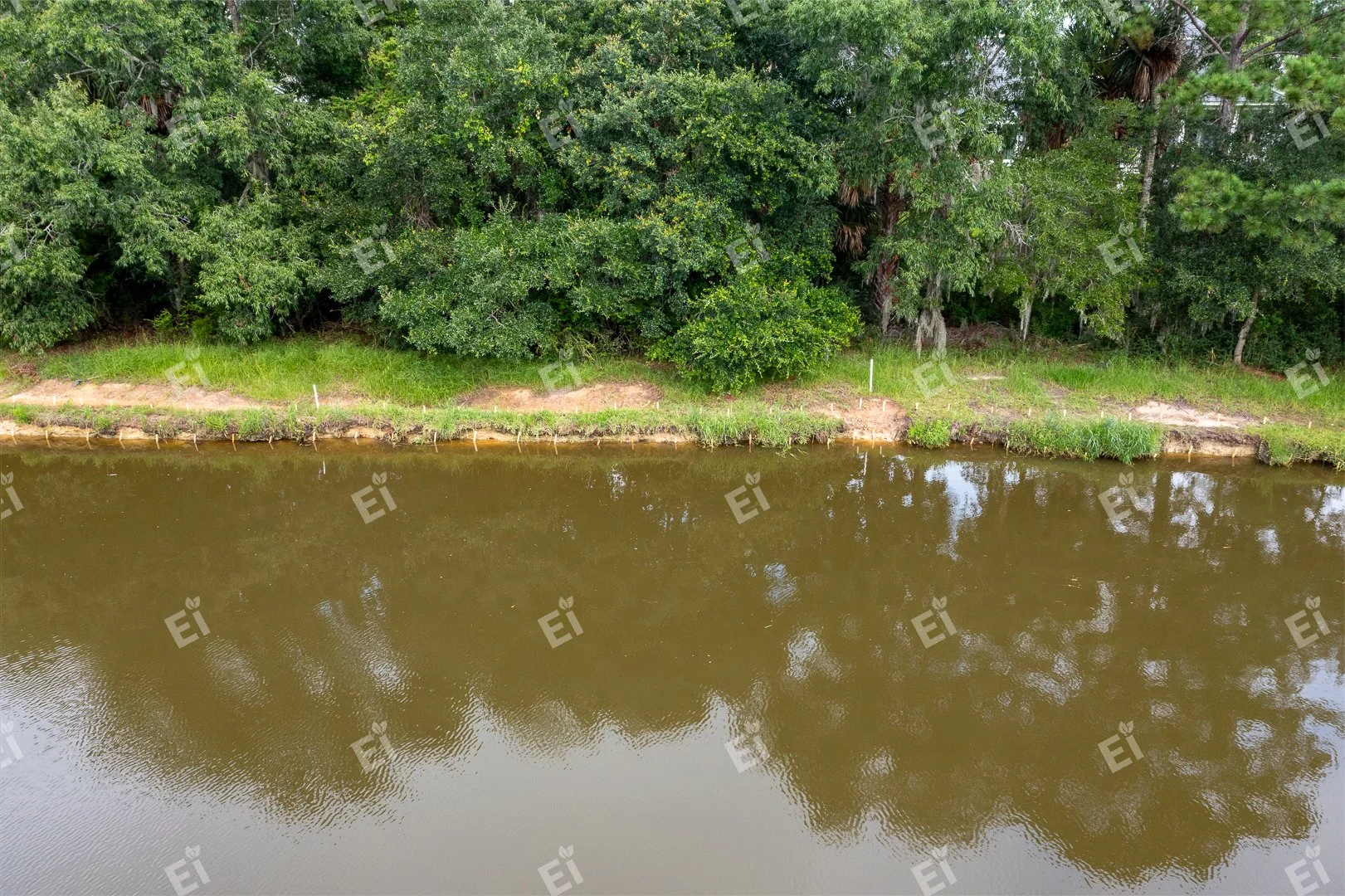
Sediment, Erosion & Environmental Stabilization in North Carolina
North Carolina’s diverse terrain—mountain slopes, Piedmont clay soils, and coastal sand—creates ongoing erosion and sediment problems for HOAs, golf courses, commercial properties, and municipal systems. Heavy rainfall, steep grades, unstable banks, and aging stormwater infrastructure accelerate soil loss, pond bank failures, and shoreline instability.
Ecological Improvements provides full-scope erosion control, sediment removal, shoreline stabilization, and environmental restoration services throughout North Carolina. Our solutions address failures at the source and are engineered for the state’s unique soils, hydrology, and regulatory requirements.
Why Erosion Happens in North Carolina
North Carolina experiences some of the most varied erosion patterns in the Southeast:
Red clay soils that erode in sheets during heavy rainfall
Steep slopes in mountain regions causing rapid washouts
Piedmont development leaving soil exposed and unstable
Coastal pond banks failing due to fluctuating water levels
Stormwater outfalls undermining banks and channels
Vegetation loss accelerating instability
Aging stormwater systems unable to handle modern runoff volumes
These conditions lead to:
Escarpments and slope failures
Pond bank collapse and shoreline slumping
Sediment buildup in ponds, swales, and outfalls
Undermining around cart paths and walking trails
Structural risk around stormwater infrastructure
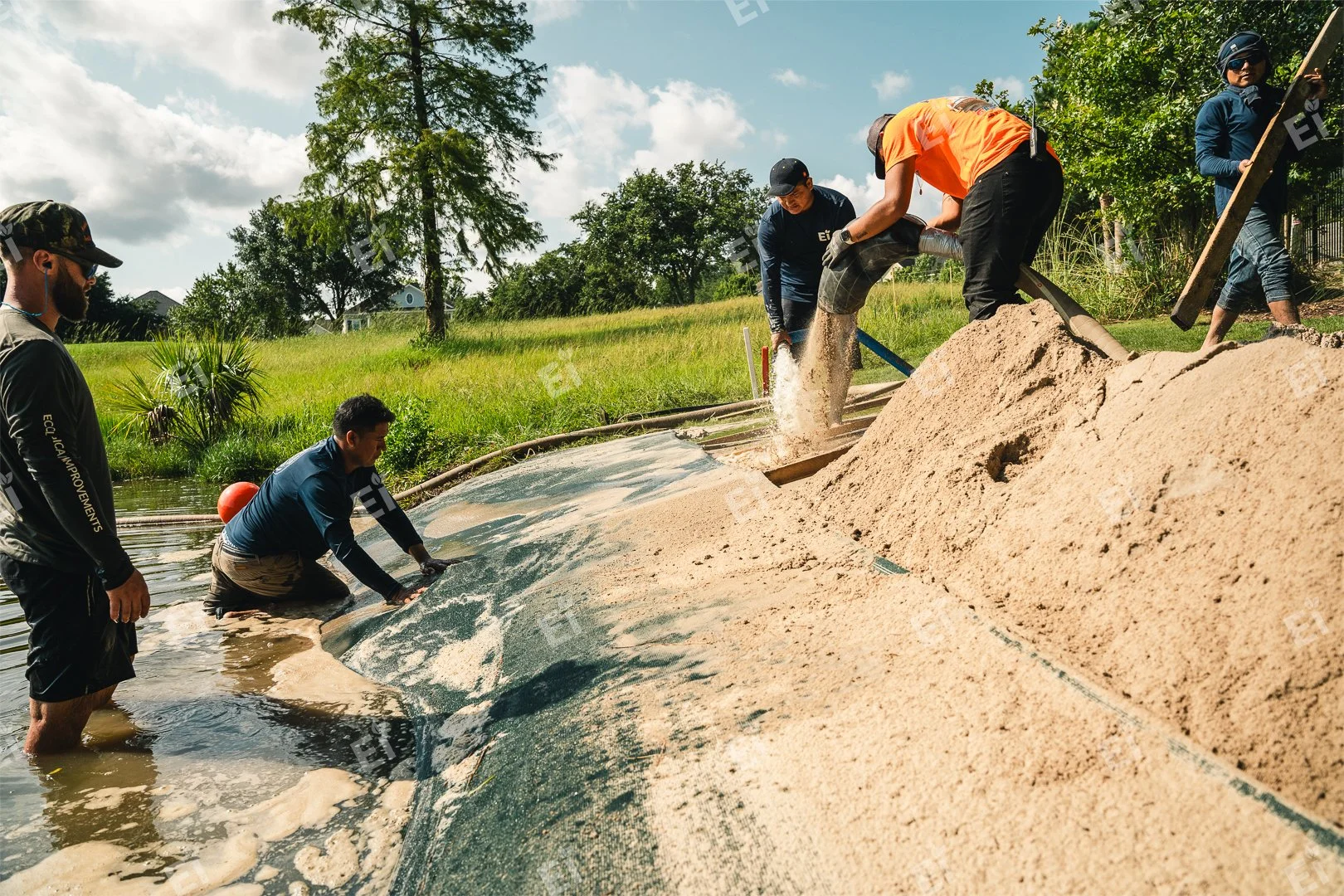
North Carolina Erosion & Stabilization Services
Sediment Retrieval & Hauling
Removal of accumulated sediment from ponds, swales, conveyance channels, and stormwater systems to restore proper flow.
Riprap & Geotextile Refurbishing
Stabilization of eroded banks, channels, and outfalls using correctly sized stone and modern erosion-resistant textiles.
Sustainable Pond Bank Stabilization
Long-term stabilization designed for NC’s soil structure, vegetation patterns, and water level fluctuations
Bioengineered Pond Bank Stabilization
Low-impact, eco-friendly solutions integrating living vegetation, biodegradable materials, root-strength systems, and slope reshaping.
Resistant Planting & Ecosystem Restoration
Installation of erosion-resistant vegetation to strengthen soil structure, prevent future failures, and restore ecological balance.
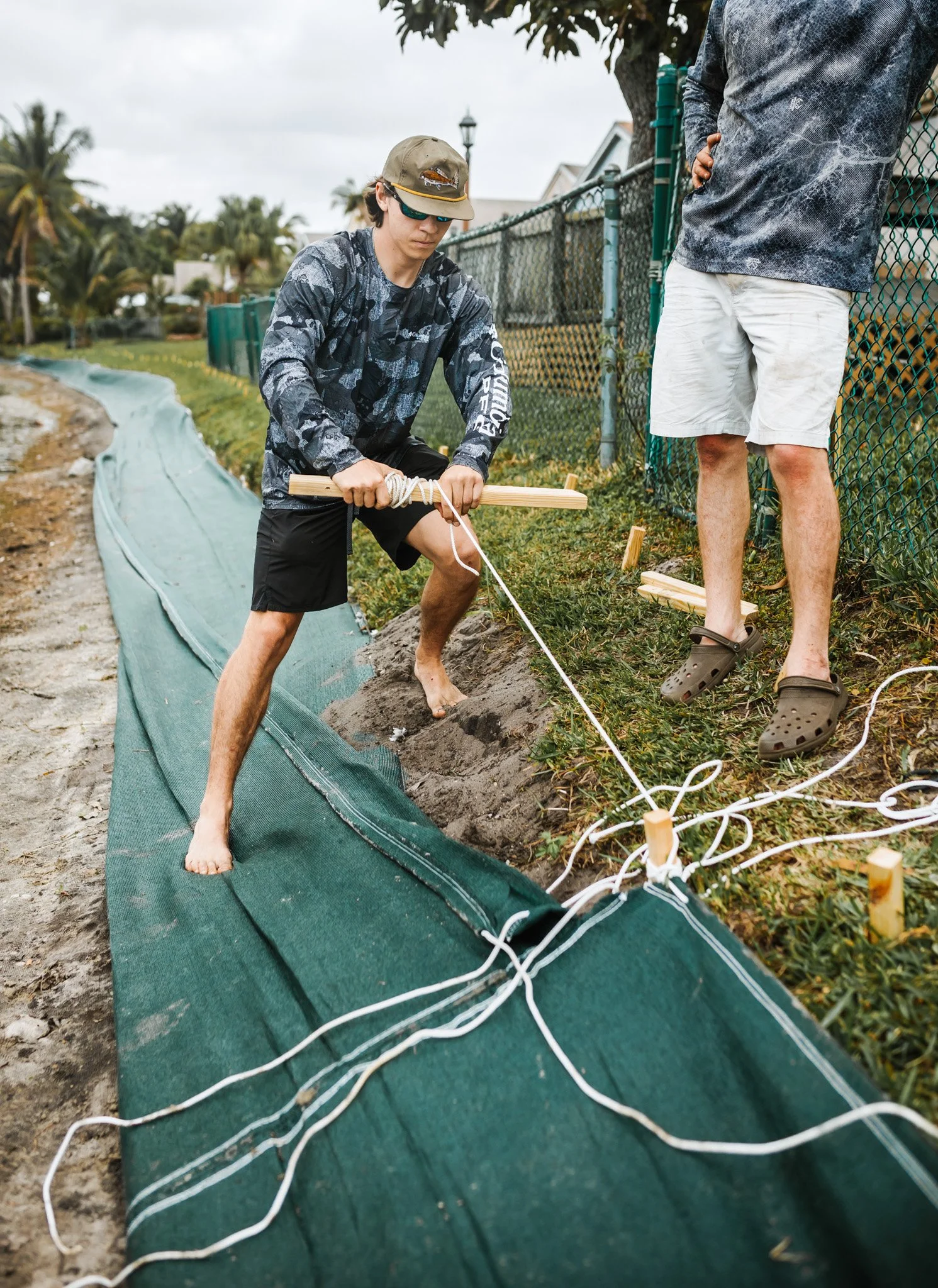
Who We Serve Across North Carolina
HOAs & POAs
Golf courses & country clubs
Commercial properties & retail centers
Industrial facilities
Municipal stormwater divisions
Developers & EPC firms
Lakefront & pondfront communities
Mountain, Piedmont, and coastal properties
Our Process — Built for North Carolina Soil & Terrain
1. Initial Consultation
We assess sediment levels, slope failures, shoreline conditions, and flow paths across NC’s unique soil types.
2. Estimate
Clear, itemized pricing based on access, soil conditions, slope gradient, stabilization needs, and material requirements.
3. Custom Plan Development & Design
We design a tailored stabilization plan considering NC soil composition, rainfall patterns, slope angles, vegetation needs, and regulatory expectations.
4. Revisions
Plans are refined based on HOA boards, golf course operations, engineers, or municipal guidance.
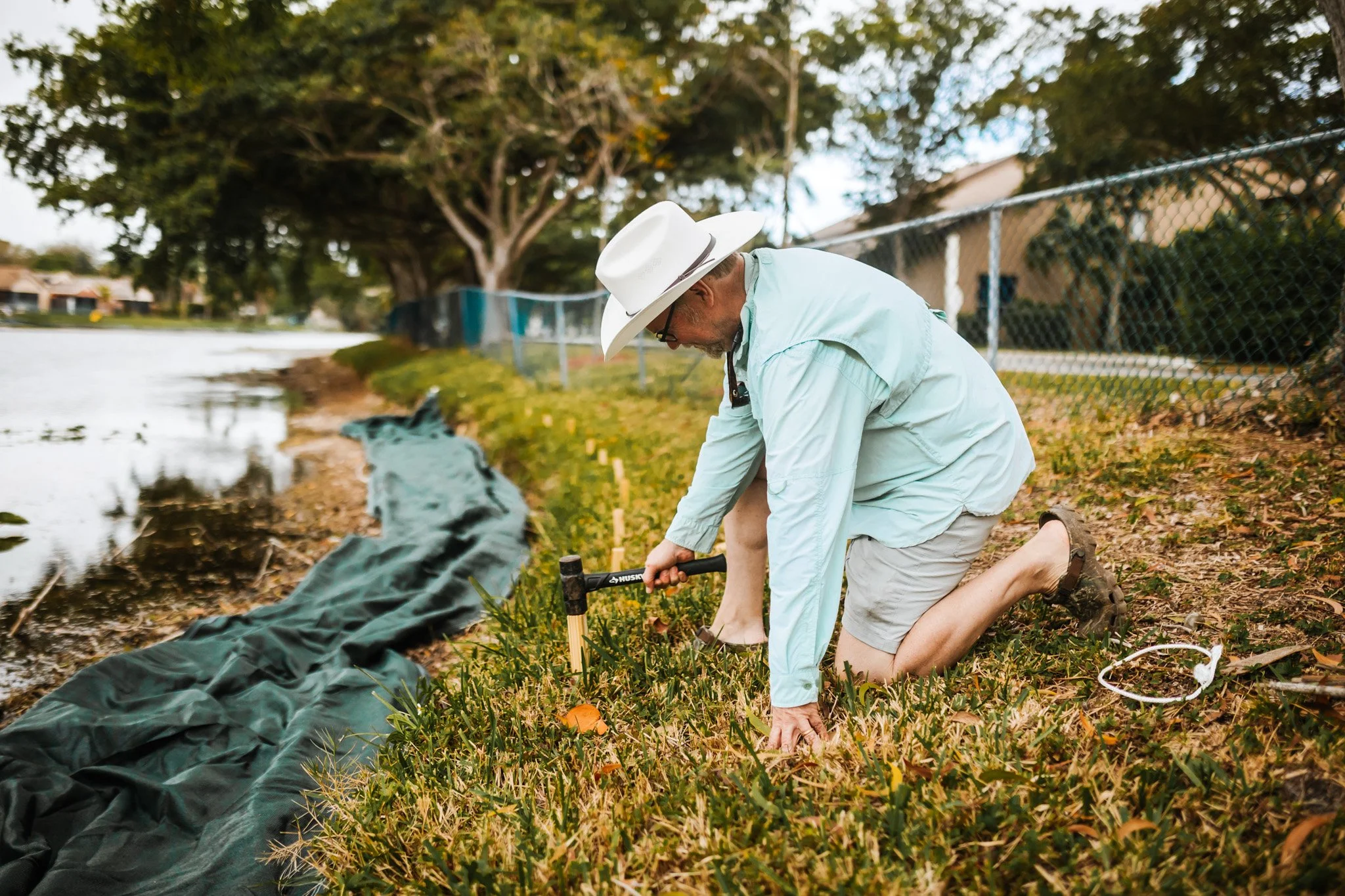
5. Implementation
We perform stabilization, sediment removal, slope reconstruction, shoreline reinforcement, and ecological restoration.
6. Monitoring, Maintenance & Reporting
We provide ongoing inspection, vegetation monitoring, and long-term maintenance options.gg
Why North Carolina Chooses Ecological Improvements
Expertise in clay soil erosion, mountain slope failures, and coastal shoreline issues
Agnostic solutions tailored to each site—not tied to any single product
CEPSCI-informed inspections and documentation
Full-state coverage from the mountains to the Outer Banks
Reliable communication with HOAs, municipalities, and golf properties
Proven erosion control results across diverse NC conditions
Frequently Asked Questions
-
Heavy rainfall, clay soils, steep grading, and aging stormwater systems accelerate erosion across the state.
-
Yes. Bioengineered and vegetation-based solutions are often ideal for NC soil conditions.
-
Yes. Our team serves all regions with tailored stabilization strategies.
-
Water fluctuations, clay shrink-swell cycles, vegetation loss, and outfall failures are common causes.
-
Projects vary by scope but often range from several days to several weeks.
North Carolina Service Areas
Charlotte • Raleigh • Durham • Greensboro • Asheville • Wilmington • Cary • Fayetteville • Winston-Salem • Chapel Hill • Concord • Jacksonville • Huntersville • Boone • Holly Springs • Wake Forest • Indian Trail • Mooresville • Burlington • Apex
Request an Erosion & Stabilization Assessment
Protect your North Carolina property from sediment buildup, pond bank failure, and slope erosion with expert stabilization services.