Choosing the Right Plants for Stormwater Pond Bank Stabilization
Eroding banks around stormwater ponds, detention basins, and drainage channels are common maintenance challenges for HOAs, municipalities, golf courses, and commercial properties. In many cases, these problems are approached with short-term fixes such as patch grading, turf replacement, or hard armoring. While those approaches may temporarily improve appearance, they often fail to address the underlying conditions driving erosion.
Vegetation, when selected and installed correctly, functions as a structural component of erosion control. Plant root systems reinforce soil, reduce runoff velocity, and stabilize slopes exposed to fluctuating water levels. However, plant performance depends entirely on choosing species suited to the environmental conditions of each section of the bank.
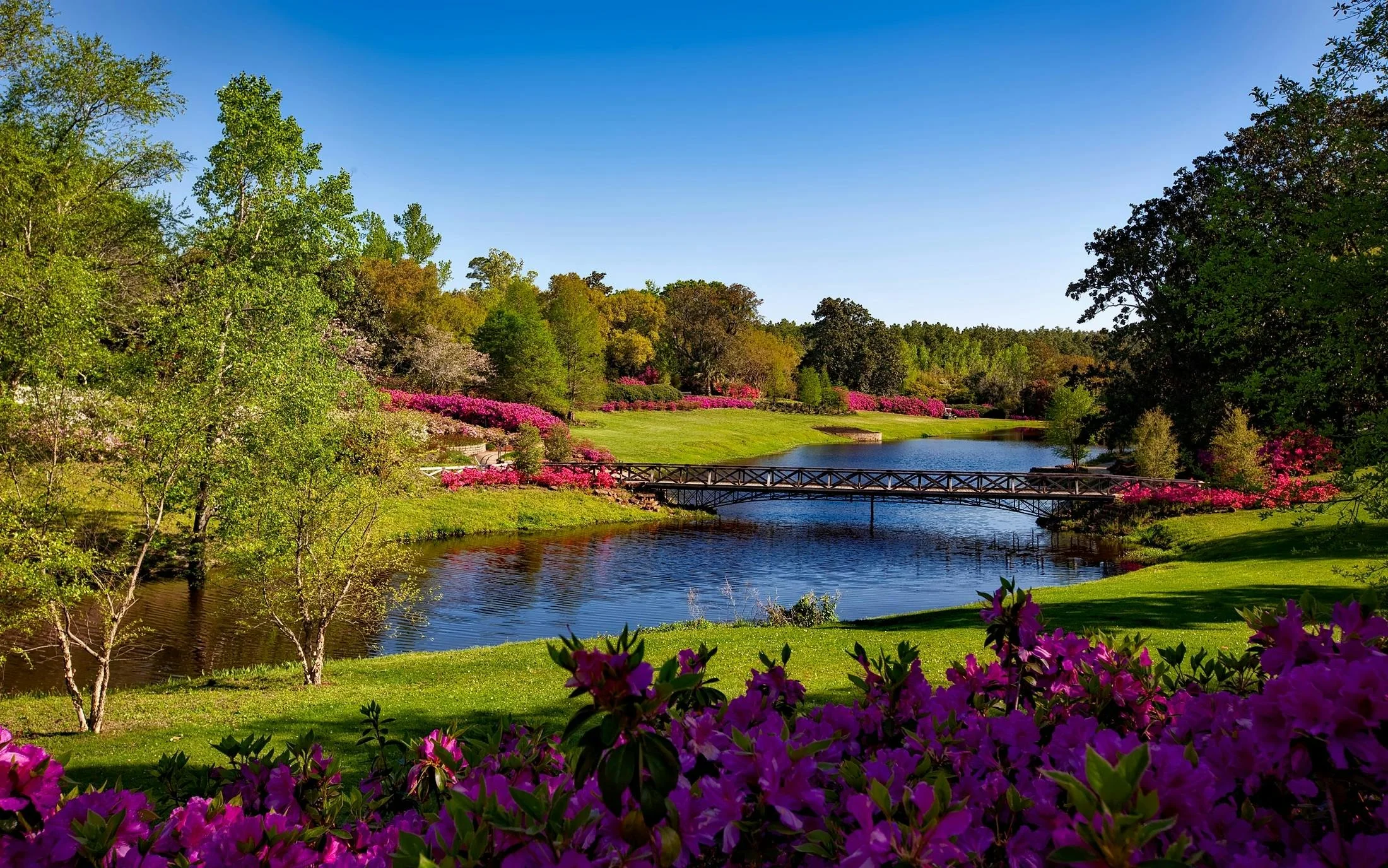
Selecting plants simply because they appear attractive in a nursery or are commonly used in landscaping rarely produces durable results. Stormwater pond edges experience hydrologic fluctuations, wave action, soil saturation, and varying sunlight exposure. Plants must be able to tolerate these conditions while providing structural stability.
At Ecological Improvements, planting plans for stormwater ponds are developed through site-specific analysis. Instead of applying generic landscaping approaches, we treat vegetation as a functional infrastructure component. This guide explains how to evaluate site conditions, choose appropriate plant communities, and design planting systems that stabilize banks and support long-term BMP performance.
Why Plant Selection Matters in Stormwater Erosion Control
Erosion control around stormwater ponds depends on the interaction between soil structure, water movement, and vegetation. Soil alone rarely provides sufficient resistance to hydraulic forces. Vegetation enhances soil stability by increasing shear strength and improving surface roughness.
Root systems interlock with soil particles, creating reinforcement similar to a natural geotextile. Dense fibrous roots distribute stresses throughout the soil profile and reduce the likelihood of slope failure. Above ground, plant stems and leaves slow water movement and reduce wave energy before it reaches exposed soil.
Not all plants provide the same stabilization benefits. Turf grasses, commonly used around ponds, have shallow root systems that provide limited reinforcement. During periods of saturation, turf roots often weaken, leaving banks vulnerable to erosion.
Native grasses, sedges, and wetland plants generally provide stronger stabilization because they evolved to tolerate fluctuating water levels and periodic flooding. Many develop deeper root systems that persist under saturated conditions.
Selecting the correct species therefore determines whether vegetation will function as effective erosion control or simply decorative ground cover.
Understanding Hydrologic Zones Along Stormwater Pond Banks
The first step in selecting appropriate plants is understanding hydrologic zones along the bank. Water depth and saturation frequency change dramatically from the pond edge to the upper slope.
Toe of Bank and Waterline Zone
The toe of the bank experiences the most challenging conditions. Plants here must tolerate periodic inundation, fluctuating water levels, and wave action. Species selected for this zone should be wetland-adapted and capable of surviving extended saturation.
Plants in this zone provide critical stabilization by anchoring soils where erosion typically begins. Their stems also dissipate wave energy that would otherwise undercut the shoreline.
Lower Bank Transitional Zone
Moving upslope, the lower bank experiences intermittent saturation rather than continuous inundation. Plants must tolerate both wet and dry periods.
This zone often experiences sheet flow during rainfall events. Vegetation here slows runoff and captures sediment before it reaches the waterline.
Upper Bank and Upland Transition Zone
The upper bank receives the least saturation but still plays an important role in erosion control. Plants in this zone should establish deep roots that reinforce soils and intercept runoff from adjacent landscapes.
Understanding these zones allows planting plans to align species with conditions they are adapted to tolerate.
Evaluating Water Level Fluctuations
Water level variability is one of the most influential factors in plant survival near stormwater ponds.
Detention ponds often experience significant fluctuations between storm events. After rainfall, water levels may rise quickly and then recede as discharge structures release water. Plants must tolerate these cycles without experiencing root damage.
Retention ponds maintain more stable water levels but may still fluctuate seasonally or during extreme rainfall events.
Evaluating how frequently the shoreline is inundated helps determine whether plants should be selected from emergent wetland species, facultative wetland species, or upland-tolerant species.
Plants that cannot tolerate prolonged saturation often decline rapidly, leaving exposed soil and restarting the erosion cycle.
The Role of Sunlight and Microclimate
Sunlight exposure significantly influences plant performance. Banks in full sun experience higher soil temperatures and faster moisture loss. Shaded banks beneath tree canopies may remain cooler and wetter.
Plants adapted to full sun may struggle under shaded conditions where photosynthesis is limited. Conversely, shade-tolerant species may decline when planted on exposed slopes.
Microclimate conditions should therefore be evaluated before selecting species. Factors to consider include:
Tree canopy coverage
Directional exposure to sunlight
Wind exposure
Soil moisture retention
Understanding these variables helps prevent plant stress and ensures long-term stability.
Soil Conditions and Slope Stability
Soil composition and slope gradient influence both plant selection and planting density.
Sandy soils drain quickly but may lack cohesion. Clay soils retain moisture but can become unstable when saturated. Organic soils provide nutrients but may compress over time.
Steeper slopes typically require plants with dense root systems capable of reinforcing soil layers. In some cases, vegetation alone may not be sufficient and structural support such as erosion control matting or geotextiles may be necessary during establishment.
Plants selected for unstable slopes should establish quickly and produce extensive root networks that anchor soil particles.
Evaluating soil characteristics helps ensure plants are capable of performing the stabilization function required.
Maintenance Expectations and Long-Term Management
Planting plans must align with realistic maintenance practices. A highly diverse planting palette may provide ecological benefits but could require specialized management that property staff cannot support.
Key questions to consider include:
Will the bank be regularly mowed?
Will the area be maintained as a natural buffer?
Will contractors perform periodic vegetation management?
If mowing will occur, plants should be selected that tolerate occasional trimming without losing stabilization benefits. If the area will be left naturalized, plant diversity may increase resilience and ecological value.
Maintenance expectations influence plant height, density, and spacing decisions.
Native Plant Communities for Bank Stabilization
Native plants are often preferred for stormwater pond banks because they are adapted to local conditions and support regional ecosystems.
Native grasses and sedges develop fibrous root systems that stabilize soils effectively. Wetland plants tolerate fluctuating water levels and provide shoreline reinforcement. Native flowering perennials add ecological diversity and visual interest.
Plant communities should include a mix of species rather than a single monoculture. Diversity increases resilience to pests, disease, and environmental stress.
Over time, diverse plant communities create layered root structures that improve soil stability and reduce erosion.
Designing Planting Plans That Support Inspections and Access
Stormwater BMPs require regular inspection and maintenance. Planting plans must preserve access to control structures, outfalls, and inspection paths.
At Ecological Improvements, vegetation density and plant height are carefully considered to maintain visibility and safe access. Strategic spacing prevents vegetation from obstructing critical infrastructure.
Designing planting plans with inspection needs in mind ensures vegetation enhances system performance without creating operational challenges.
Avoiding Common Planting Mistakes
Many erosion control plantings fail due to predictable mistakes.
Planting unsuitable species in saturated zones often results in rapid mortality. Overly sparse planting leaves soil exposed and vulnerable to erosion before roots establish. Ignoring maintenance expectations can lead to invasive species dominance.
Another common issue is selecting ornamental plants that provide minimal stabilization. While visually appealing, these plants may lack the root strength needed to reinforce soils.
Successful planting plans require both ecological understanding and practical field experience.
Long-Term Performance of Vegetated Stabilization
Vegetation-based erosion control improves over time as root systems mature. Early establishment phases may require temporary support such as erosion control matting or supplemental irrigation.
Once established, plants provide continuous stabilization with minimal intervention. Root networks strengthen soil structure and increase resistance to hydraulic stress.
Vegetated banks also enhance water quality by intercepting sediment and nutrients before they reach open water.
Compared to repeated turf repairs or structural armoring, well-designed plant communities provide durable long-term performance.
Ecological Improvements’ Planting Strategy for Stormwater Banks
Ecological Improvements approaches plant selection as part of a broader BMP performance strategy.
Our process includes:
Evaluating hydrologic zones and water level fluctuations
Assessing soil conditions and slope stability
Selecting regionally appropriate native species
Designing plant communities that balance stabilization and maintenance
Ensuring inspection access and visibility are preserved
This system-based approach allows vegetation to function as a structural element rather than decorative landscaping.
Contact Us!
If erosion along your stormwater pond banks is recurring despite repeated repairs, the issue may be plant selection rather than grading alone. Ecological Improvements designs site-specific planting plans that stabilize soil, improve water quality, and reduce long-term maintenance costs. Contact our team to evaluate your pond banks and develop a vegetation strategy that supports durable erosion control.