Erosion Control Program for Golf Superintendents (Part 2)
Stormwater and erosion challenges on golf courses are fundamentally different from those faced by commercial developments or residential communities. Slopes are integrated into playability. Shorelines are part of the visual experience. Drainage systems are expected to function invisibly. When erosion occurs, it does not just threaten infrastructure. It affects turf health, safety, aesthetics, water quality, regulatory compliance, and the reputation of the course itself.
Ecological Improvements designed the Erosion Control Program for Golf Superintendents to remove this burden entirely. This is not a product-driven service and not a reactive maintenance contract. It is a system-based, engineered program built to give superintendents clarity, predictability, and long-term erosion control outcomes without disrupting play or overwhelming annual budgets.
This page serves as the definitive resource on how the program works, why it was built, and how it addresses the unique stormwater realities of golf courses.
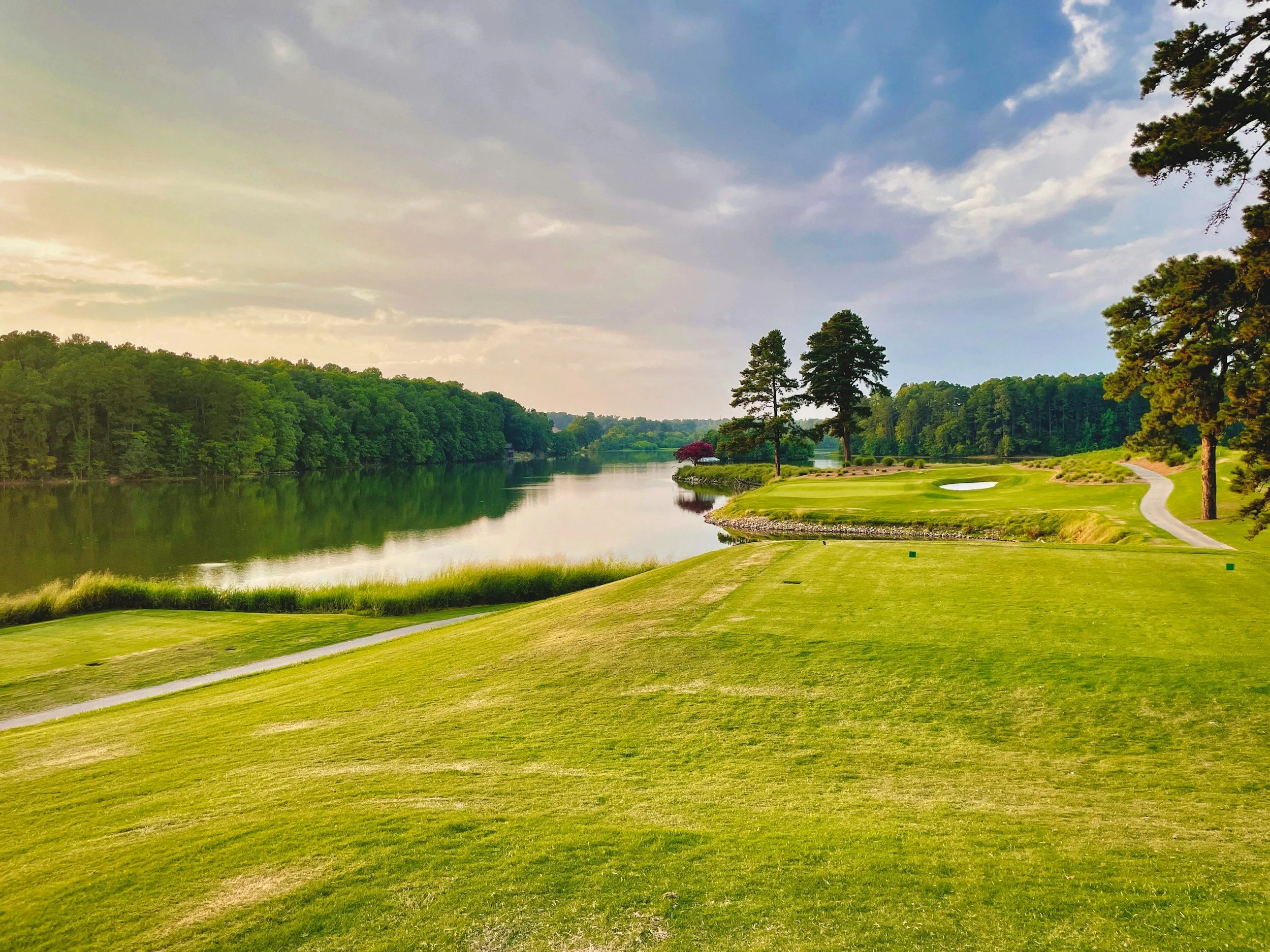
Why Golf Course Erosion Requires a Different System
Golf courses are complex hydrologic environments. They combine large expanses of managed turf, engineered slopes, water features, cart paths, creek crossings, and aging stormwater infrastructure into a single interconnected system. Treating erosion on a golf course as a simple “repair” problem is one of the most common and costly mistakes in the industry.
Unlike standard properties, erosion on a golf course directly affects playability and safety. A failing pond edge can encroach on fairways. A degraded creek crossing can limit cart access. A compromised slope can expose irrigation lines, create trip hazards, or force course closures after storms. Each of these issues creates operational strain for superintendents who already manage agronomy, staffing, equipment, and member expectations.
Another defining challenge is that golf courses are often pressured into one-size-fits-all erosion solutions. Products are marketed as universal fixes, regardless of soil composition, hydraulic loading, slope geometry, or aesthetic requirements. These treatments may appear effective in the short term but often fail under real storm conditions, leading to repeated repairs and escalating costs.
Ecological Improvements built its erosion control program specifically to address these realities. The program is grounded in systems thinking. Every erosion issue is evaluated in context of upstream drainage, downstream impacts, playability constraints, regulatory considerations, and long-term maintenance capacity. The result is not a patchwork of fixes, but a cohesive erosion control strategy aligned with how golf courses actually function.
An Agnostic, Course-Specific Engineering Approach
The core differentiator of Ecological Improvements’ program is its agnostic approach. The firm does not sell proprietary erosion products, prefabricated systems, or single-solution packages. Instead, every recommendation is engineered around the specific conditions of the course.
This approach begins with the understanding that no two golf courses are alike. Soil profiles vary significantly even within the same property. Hydraulic forces change depending on watershed size and slope gradients. Turf species, mowing heights, and maintenance practices all influence erosion risk. Visual standards also differ widely between public, private, resort, and tournament-level courses.
Because of this variability, Ecological Improvements evaluates erosion control through multiple technical lenses:
Hydrology and flow paths
Soil stability and compaction
Slope geometry and loading
Vegetative cover and root structure
Shoreline and channel dynamics
Maintenance access and equipment constraints
Budget cycles and capital planning
Solutions may include vegetated systems, reinforced soil structures, articulated concrete, stone systems, engineered matting, or hybrid approaches. The selection is driven by performance requirements, not product availability.
This agnostic model ensures that superintendents receive solutions that align with both immediate needs and long-term operational goals. It also protects courses from being locked into systems that require specialized maintenance or frequent replacement.
What the Erosion Control Program Includes
The Erosion Control Program for Golf Superintendents is structured as a comprehensive system, not a single service. It is designed to provide visibility, documentation, and accountability across the entire stormwater and erosion network of the course.
Comprehensive BMP and Stormwater Inspection
Every program begins with a full stormwater and Best Management Practice inspection. This walkthrough evaluates:
Pond shorelines and embankments
Drainage channels and swales
Creek crossings and outfalls
Cart path edges and slope interfaces
Inlet and outlet structures
Areas of active or early-stage erosion
The goal is to identify both current failures and future risk zones. Early-stage erosion is often invisible to the untrained eye but can be predicted through soil movement patterns, vegetation loss, and hydraulic stress indicators.
This inspection forms the technical foundation of the entire program and allows superintendents to move from reactive response to proactive management.
Engineered Recommendations With a System Guarantee
Following the inspection, Ecological Improvements develops engineered recommendations tailored to the course’s conditions. These recommendations are backed by a System Guarantee, which serves as the firm’s professional assurance that the proposed solution is designed for long-term integrity.
The System Guarantee is not a product warranty. It is a commitment that the design considers hydraulic forces, soil behavior, and environmental conditions to minimize the risk of premature failure. This level of engineering oversight is particularly valuable for courses that have experienced repeated erosion repairs with limited success.
Board and Management-Ready Documentation
One of the most overlooked challenges for superintendents is communication. Explaining erosion risks, repair costs, and long-term benefits to general managers, boards, or ownership groups can be difficult without clear, professional documentation.
As part of the program, Ecological Improvements provides clean, structured presentations that translate technical findings into understandable insights. These materials support:
Capital planning discussions
Budget approvals
Risk mitigation strategies
Long-term maintenance planning
This documentation allows superintendents to advocate for proactive solutions with confidence and credibility.
Removing the Stormwater Burden From Superintendents
Superintendents are hired to manage turf health, course conditions, and the player experience. Yet stormwater and erosion issues frequently pull them into roles they were never trained or staffed to handle. Compliance coordination, emergency response, and contractor oversight often become added responsibilities with high stakes and limited support.
The Erosion Control Program was designed specifically to reverse this burden. By creating a clear system for inspection, evaluation, and solution development, the program removes uncertainty from stormwater management. Superintendents no longer have to guess which issues are urgent, which can wait, or which solutions will hold up over time.
This shift delivers several operational benefits:
Reduced emergency repairs after storm events
Fewer disruptions to play and course access
Improved predictability in maintenance and capital planning
Stronger alignment between environmental performance and course aesthetics
The result is a more stable course environment where erosion control supports, rather than competes with, core superintendent responsibilities.
Long-Term Performance Over Short-Term Fixes
A defining principle of the program is long-term performance. Many erosion solutions fail not because they were installed incorrectly, but because they were never designed to address the full system. Treating symptoms without addressing underlying hydrologic forces leads to recurring failures and escalating costs.
Ecological Improvements emphasizes durability, adaptability, and maintainability in every recommendation. Solutions are evaluated based on how they will perform over multiple storm cycles, seasonal changes, and maintenance regimes.
This long-term focus supports:
Improved water quality and reduced sediment transport
Enhanced bank stability and slope integrity
Reduced maintenance intervention over time
Preservation of course aesthetics and natural character
For courses planning future renovations or infrastructure upgrades, the program also integrates with broader site planning efforts. Internal linking opportunities include resources on stormwater pond maintenance, shoreline stabilization strategies, and long-term BMP compliance planning.
Why Ecological Improvements Built This Program
The Erosion Control Program was not developed in isolation. It emerged from years of observing the same challenges across hundreds of properties. Golf courses were consistently caught between environmental responsibility and operational realities.
Common patterns included:
Repeated erosion repairs that failed after major storms
Budget overruns caused by reactive maintenance
Limited access to engineering expertise tailored to golf courses
Contractors applying treatments instead of systems-based solutions
Ecological Improvements recognized that solving these problems required more than better products. It required a fundamentally different approach built on education, engineering, and long-term partnership.
By formalizing this approach into a structured program, the firm created a scalable, repeatable system that delivers consistent outcomes across diverse course environments.
Who This Program Is Designed For
The Erosion Control Program for Golf Superintendents is designed for courses that value proactive management and long-term performance. It supports a wide range of course types, including:
Private member-owned clubs
Public and municipal courses
Resort and destination courses
Tournament-level facilities
Multi-course properties
Whether overseeing a compact layout with a few aging ponds or managing hundreds of acres with complex drainage networks, the program adapts to the scale and needs of the property.
Courses that benefit most are those seeking to:
Reduce erosion-related disruptions
Improve communication with boards or ownership
Align environmental performance with course quality
Move away from reactive stormwater management
The Result: Stability, Clarity, and Confidence
At its core, the Erosion Control Program delivers something rare in stormwater management: confidence. Superintendents gain a clear understanding of their course’s erosion risks, a plan to address them, and a partner committed to long-term system health.
The result is not just erosion control. It is a more resilient course that maintains playability, protects water resources, and supports the long-term reputation of the facility.
There are no surprises after storms. No last-minute emergency meetings. No erosion creeping into fairways or compromising infrastructure. Just a structured system designed to perform under real-world conditions.
Schedule a Consultation
Ecological Improvements offers consultations to evaluate whether the Erosion Control Program is the right fit for your course. These consultations focus on understanding site conditions, operational goals, and long-term planning needs.
A consultation is the first step toward removing the stormwater burden from your team and establishing a clear, engineered path forward.