Stormwater BMP Maintenance: Turning Infrastructure Into Long-Term Assets
Stormwater best management practices (BMPs) are foundational infrastructure for modern development. Ponds, swales, forebays, level spreaders, and outfalls quietly manage runoff, protect downstream waterways, and help properties remain compliant with local, state, and federal regulations. When they are functioning properly, they blend into the landscape and rarely attract attention. When they are neglected, they quickly become visible, costly liabilities.
Erosion along pond banks, sediment-filled forebays, failing outfalls, and overgrown swales are not sudden failures. They are symptoms of deferred maintenance and incomplete system thinking. Left unaddressed, these issues escalate into structural damage, regulatory risk, and declining property value.
At Ecological Improvements, stormwater BMP maintenance is approached as a systems-based process. Our work focuses on preserving function, preventing failure, and restoring ecological health so that BMPs protect water quality, infrastructure, and long-term asset value. This page serves as a definitive guide to stormwater BMP maintenance, explaining why it matters, how problems develop, and how proactive management turns stormwater infrastructure into a durable, functional asset.
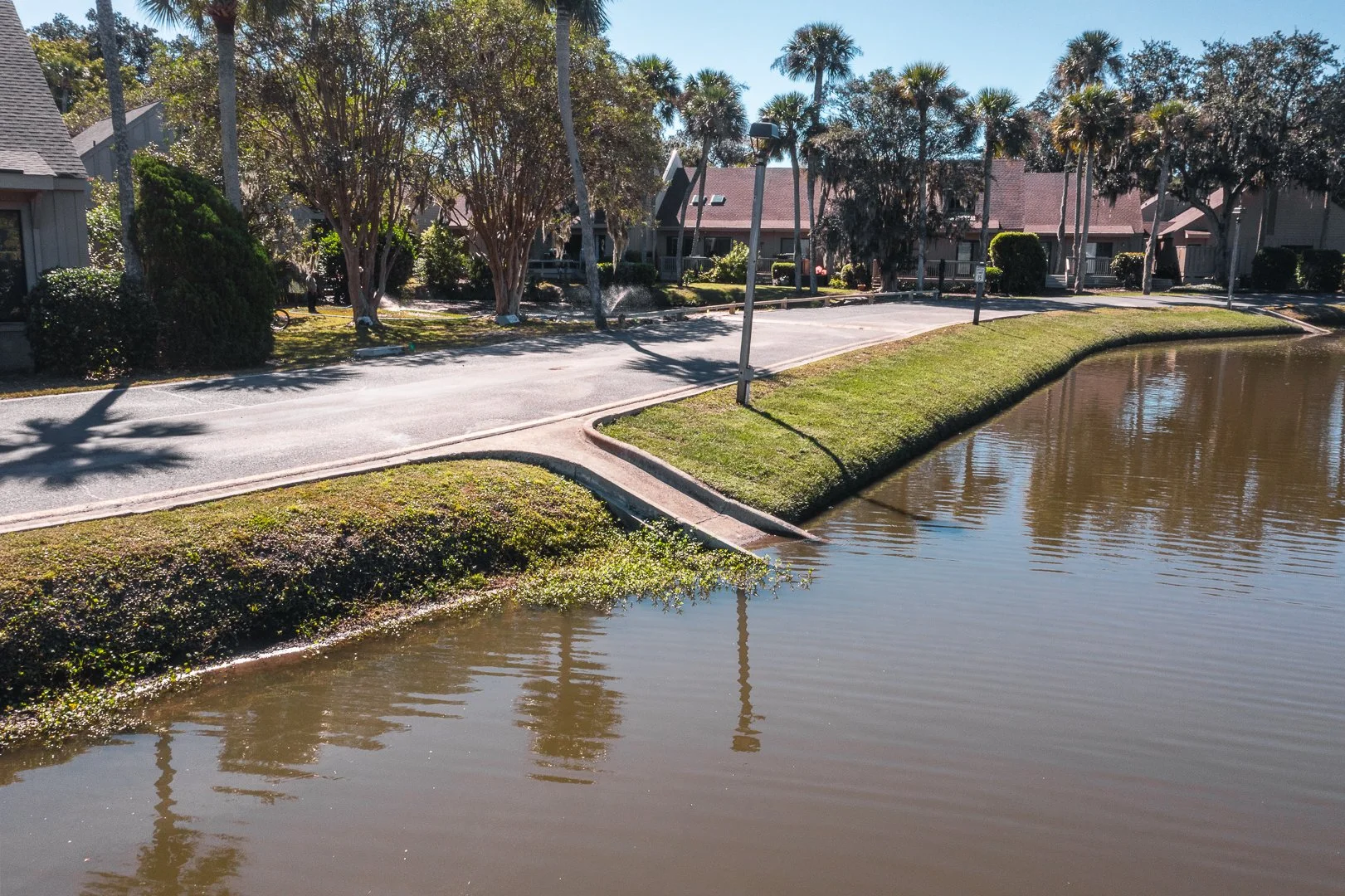
Understanding Stormwater BMPs as Integrated Systems
Stormwater BMPs are often discussed as individual features. In practice, they operate as interconnected systems that manage the movement, velocity, and quality of stormwater across a site. When one component underperforms, downstream components absorb the stress, accelerating wear and failure.
A detention or retention pond relies on stabilized banks, functional forebays, intact outlet structures, and controlled inflows. A vegetated swale depends on consistent grading, dense root systems, and unobstructed flow paths. Level spreaders and outfalls must dissipate energy effectively to prevent downstream erosion. Each component must function as designed for the system to remain stable.
Maintenance failures typically begin at transition points. Inflows introduce high-energy runoff. Outfalls concentrate discharge. Shorelines fluctuate with water levels. These areas experience repeated hydraulic stress and are the first to show erosion, sediment displacement, or vegetation loss. Addressing these points early is critical to maintaining overall system performance.
Stormwater BMP maintenance is not cosmetic landscaping. It is applied ecological engineering that balances hydraulic function, soil stability, and vegetation dynamics. Proper maintenance protects design intent while allowing systems to adapt naturally over time.
Erosion as the Earliest Warning Sign
Erosion is often the first visible indicator that a stormwater BMP is under stress. Small rills on slopes, exposed roots along shorelines, and thinning vegetation may appear minor, but they signal deeper instability. Soil loss reduces structural integrity and creates pathways for accelerated runoff, compounding the problem with each storm event.
Common erosion indicators include washed-out pond banks, slumping shorelines, sediment fans below outfalls, and bare soil in swales. These issues rarely resolve on their own. Instead, they progress as vegetation fails to reestablish, soils compact or collapse, and hydraulic forces increase.
Unchecked erosion threatens more than aesthetics. It undermines access paths, compromises outlet structures, exposes utilities, and increases sediment loads that reduce storage capacity and treatment efficiency. Repair costs increase significantly once erosion reaches structural components.
Proactive erosion control focuses on stabilizing soils, restoring vegetative cover, and managing water movement. This often involves a combination of grading corrections, soil amendments, erosion control matting, and native plant installation. The goal is not just to stop erosion, but to create conditions where vegetation and soils can sustain stability over time.
Stormwater Pond Maintenance: Beyond the Waterline
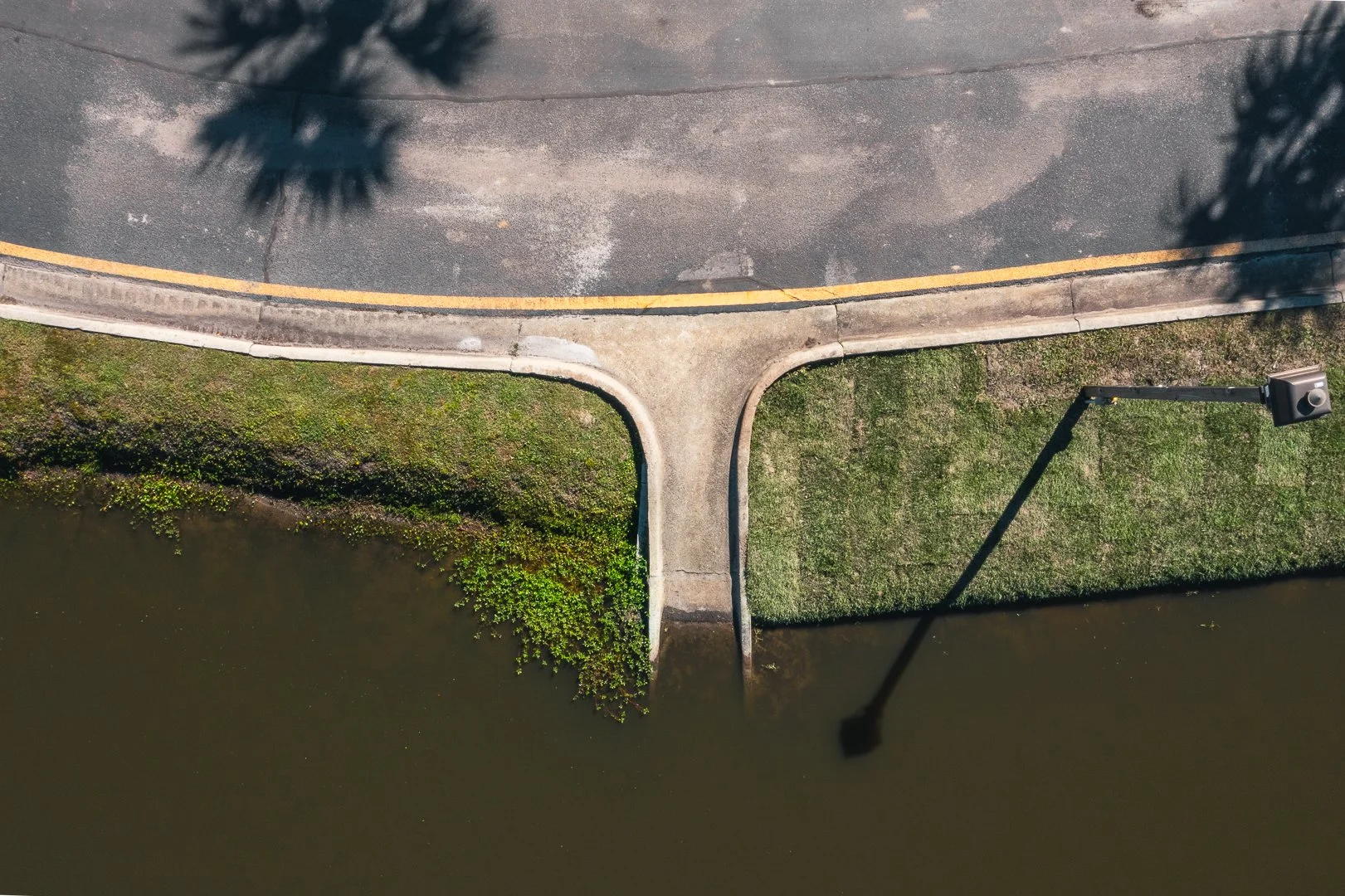
Stormwater ponds are among the most visible BMPs on a property. They also carry some of the highest long-term maintenance risks if neglected. Pond performance depends on shoreline stability, sediment management, vegetation balance, and functional outlet structures.
Sediment accumulation is inevitable in stormwater ponds. Forebays are designed to capture sediment before it reaches the main pool, but without routine maintenance, they fill and lose effectiveness. When sediment bypasses the forebay, it reduces pond depth, shortens detention time, and increases nutrient loading.
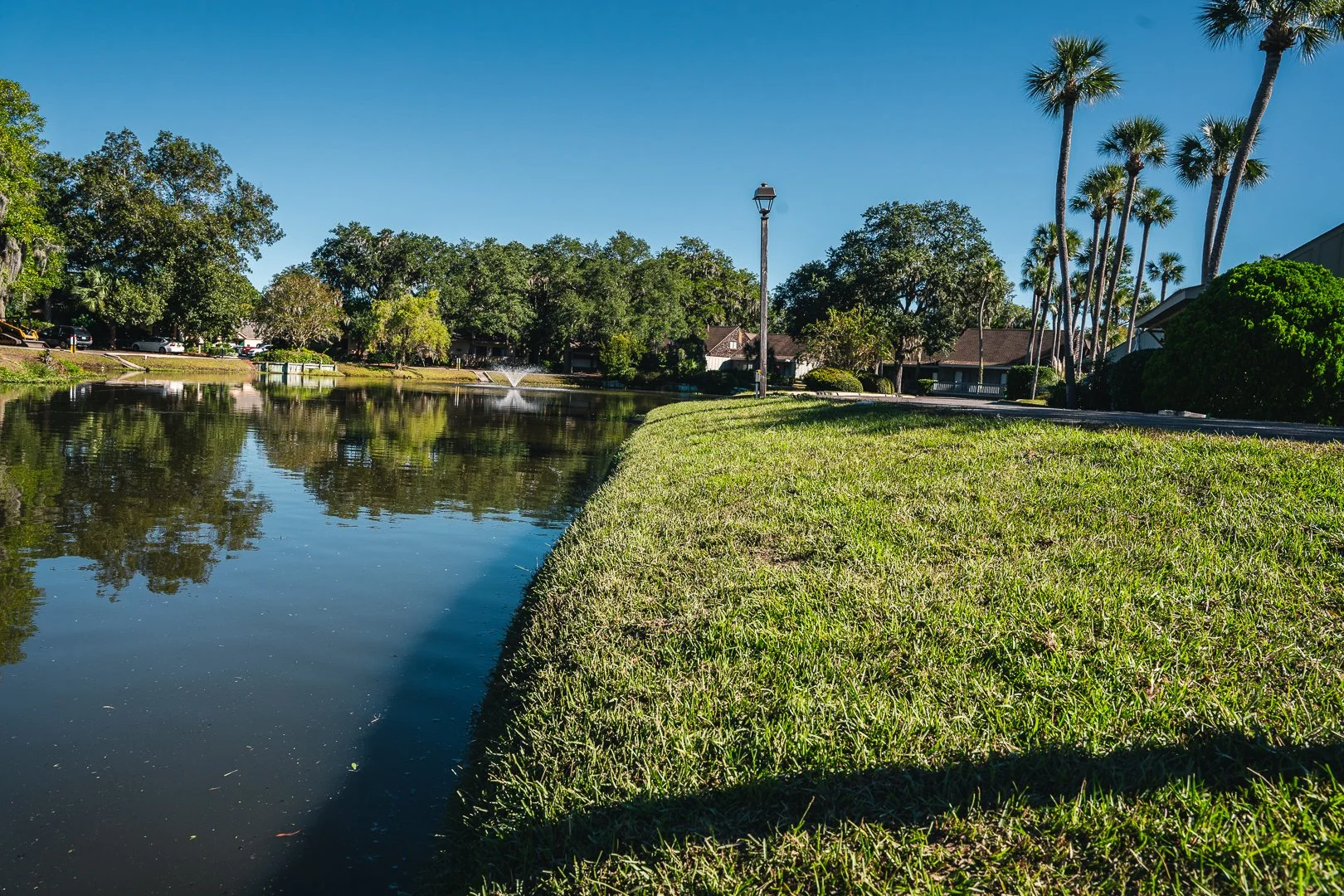
Shoreline erosion is another common challenge. Fluctuating water levels, wave action, and foot traffic weaken banks. Once vegetation is lost, erosion accelerates rapidly. Stabilization requires regrading where necessary, installing erosion control materials, and reestablishing deep-rooted native plants that tolerate inundation and dry periods.
Vegetation management within ponds is equally important. Invasive species often outcompete natives, creating monocultures with shallow root systems and limited ecological value. Over time, these plants contribute to bank instability and poor habitat quality. Selective removal of invasives and replanting with native species improves structural stability and ecological function simultaneously.
Outlet structures must be inspected regularly to ensure they are free of debris, structurally sound, and operating as designed. Blockages or deterioration can lead to overtopping, downstream erosion, or regulatory noncompliance.
Effective pond maintenance integrates sediment management, erosion control, vegetation planning, and structural inspections into a coordinated program.
Swales and Conveyance Channels: Maintaining Flow and Stability
Swales are often underestimated because they appear simple. In reality, they play a critical role in conveying runoff, reducing velocity, and promoting infiltration. When swales fail, runoff concentrates, erosion accelerates, and downstream BMPs are overwhelmed.
Common swale issues include channel incision, uneven grades, sediment deposition, and vegetation loss. These problems often arise from inconsistent mowing practices, vehicle traffic, or altered drainage patterns from site modifications.
Maintaining swales requires preserving their original geometry and vegetation density. Slopes must remain stable, and flow paths must be clear without becoming overly armored. Vegetation should be dense enough to slow water but not so tall or woody that it obstructs flow or traps debris.
In some cases, swales benefit from targeted reinforcement using erosion control matting or check structures in high-energy sections. These interventions should be designed to integrate with vegetative solutions rather than replace them.
Routine inspection after storm events is critical for identifying early signs of instability. Addressing minor erosion or sediment buildup promptly prevents costly reconstruction and preserves overall system function.
Forebays: The First Line of Defense Against Sediment
Forebays are sacrificial components designed to capture sediment and debris before they enter ponds or wetlands. When forebays are neglected, sediment migrates downstream, reducing treatment capacity and increasing maintenance costs elsewhere in the system.
Effective forebay maintenance includes regular sediment surveys, timely removal, and stabilization of disturbed areas. Sediment removal should be performed carefully to avoid damaging outlet structures or adjacent vegetation.
After sediment removal, forebays must be restored with appropriate grading, erosion control measures, and vegetation. Leaving bare soil invites rapid erosion and defeats the purpose of maintenance.
Forebays also require inspection of inlet structures and energy dissipation features. Riprap aprons, level spreaders, and plunge pools must remain intact to prevent scour and channel formation.
Because forebays are designed for periodic disturbance, a proactive maintenance schedule ensures they function as intended without becoming chronic problem areas.
Level Spreaders and Outfalls: Managing Energy at Discharge Points
Level spreaders and outfalls are critical transition points where concentrated flow is redistributed or discharged. These locations experience high hydraulic stress and are common sources of severe erosion if improperly maintained.
Level spreaders must remain level to function correctly. Minor settlement or sediment buildup can cause flow to concentrate, leading to gully formation and downstream damage. Regular inspection and regrading are essential to preserve uniform distribution.
Outfalls require stable aprons, adequate energy dissipation, and secure connections to pipes or channels. Missing stones, undermined structures, or exposed pipes indicate failure that will worsen rapidly if ignored.
Vegetation around outfalls should be managed to stabilize soils without obstructing flow or access. Native grasses and groundcovers are often effective when combined with structural stabilization.
Maintenance at these discharge points protects downstream waterways, reduces regulatory risk, and prevents expensive emergency repairs.
Vegetation Management as a Structural Strategy
Vegetation is not an aesthetic afterthought in stormwater BMPs. It is a primary structural component. Root systems bind soil, absorb energy, and regulate moisture. When vegetation fails, structural integrity follows.
Invasive species management is a core aspect of BMP maintenance. Invasives often establish quickly but provide limited stabilization and poor habitat. Their removal must be paired with immediate replanting to prevent erosion.
Native plants selected for BMPs should tolerate site-specific conditions including inundation, drought, nutrient loads, and maintenance access. Proper plant selection reduces long-term maintenance needs and improves system resilience.
Routine vegetation management includes selective mowing, pruning, and monitoring for invasive reestablishment. Overmanagement can be as damaging as neglect, particularly when it reduces root density or exposes soil.
A vegetation strategy grounded in ecological function supports long-term stability and performance.
Water Quality and System Performance
Stormwater BMPs are designed to improve water quality by reducing sediment, nutrients, and pollutants. Maintenance directly influences treatment effectiveness.
Sediment buildup reduces storage volume and shortens detention time. Excess nutrients promote algae growth, degrading aesthetics and ecological health. Poor circulation and clogged outlets exacerbate these issues.
Maintenance activities such as sediment removal, vegetation management, and structural repair restore treatment capacity and improve water clarity. These improvements benefit downstream waterways and support compliance with water quality regulations.
Monitoring water quality indicators such as turbidity, vegetation health, and sediment depth provides valuable feedback on system performance and maintenance needs.
Regulatory Compliance and Risk Management
Many stormwater BMPs are subject to regulatory requirements tied to permits, inspections, and maintenance documentation. Neglected BMPs increase the risk of violations, enforcement actions, and liability exposure.
Proactive maintenance demonstrates due diligence and reduces the likelihood of costly corrective actions. Documentation of inspections, repairs, and vegetation management supports compliance and simplifies reporting.
From a risk management perspective, maintaining BMPs protects infrastructure, reduces safety hazards, and minimizes exposure to claims related to flooding or property damage.
Property Value and Perception
Stormwater BMPs influence how a property is perceived by residents, tenants, buyers, and inspectors. Well-maintained ponds, swales, and green infrastructure signal responsible ownership and long-term planning.
Conversely, eroding banks, murky water, and failing structures suggest deferred maintenance and hidden liabilities. These perceptions affect property value, lease decisions, and investor confidence.
BMP maintenance is an investment in asset protection. It preserves functionality while enhancing the visual and ecological quality of a site.
Ecological Improvements’ System-Based Maintenance Approach
Ecological Improvements integrates erosion control, structural assessment, vegetation management, and water quality considerations into a unified maintenance strategy. Our approach prioritizes early intervention, durable solutions, and ecological function.
We assess BMPs as systems, identifying stress points and addressing root causes rather than symptoms. Repairs are designed to prevent recurrence, not just restore appearance.
By aligning maintenance practices with hydraulic and ecological principles, we help clients move BMPs from problem areas to long-term assets.
When to Schedule Stormwater BMP Maintenance
BMP maintenance should be planned proactively, not triggered by visible failure. Regular inspections, seasonal maintenance, and post-storm assessments identify issues early.
Properties benefit from scheduled maintenance programs tailored to site conditions, BMP types, and regulatory requirements. This approach reduces emergency repairs and extends infrastructure lifespan.
If your stormwater BMPs are showing signs of erosion, sediment buildup, or vegetation decline, a proactive maintenance strategy can protect both performance and property value. Ecological Improvements provides system-based stormwater BMP maintenance solutions grounded in technical expertise and ecological understanding. Contact our team to evaluate your BMPs and develop a maintenance plan that supports long-term stability and compliance.