Forebay restoration removes accumulated sediment and repairs damaged features so a stormwater system’s pretreatment area can function as intended. An effective project restores the appropriate sediment storage, maintains the designed flow path, stabilizes disturbed ground, and establishes a practical plan for future cleanouts.
For property owners and stormwater managers, the starting point is straightforward: compare the forebay’s current condition with its approved design and maintenance requirements. A pond that looks attractive can still have a forebay approaching its cleanout threshold, while visible sediment alone does not establish how much storage has been lost. Measurements and system context make the difference between a well-defined maintenance project and excavation that misses the underlying problem.
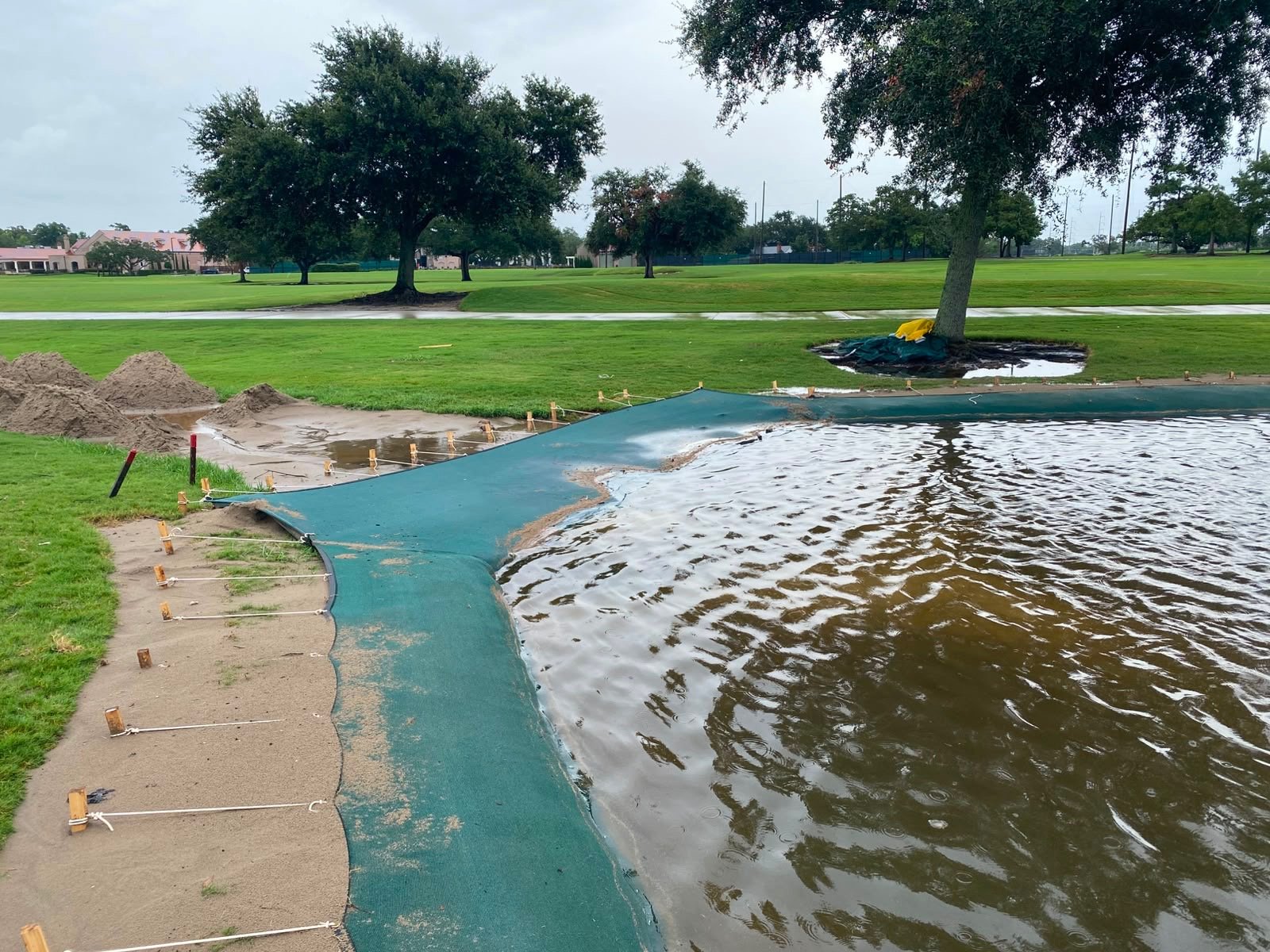
How Forebays Protect the Larger Stormwater System
What is a stormwater forebay?
A stormwater forebay is a designated pretreatment area near an inlet to a pond, basin, wetland, or other stormwater practice. It receives incoming runoff before that water enters the main treatment area, creating a defined location where sediment can accumulate and later be removed.
Depending on the design, a forebay may be separated from the main basin by a berm, weir, stone barrier, or other structure. Its shape, bottom elevation, inlet protection, and overflow arrangement work together to manage incoming flow and support sediment settling. A shallow deposit at a pipe outlet is not necessarily a designed forebay, and an inlet pool should not be reshaped without understanding its intended function.
Forebays concentrate part of the maintenance burden in a smaller, accessible area. Clemson Extension describes them as pretreatment features that help protect the main pond’s permanent pool and can be easier to access for sediment removal than the larger basin. That accessibility is a functional requirement, not simply a convenience for contractors. [1]
Why sediment capture depends on more than depth
Runoff carries particles of different sizes, from sand and grit to fine silt and clay. As flow enters a properly configured forebay, energy dissipation and available settling space allow some of that material to fall out of suspension before water moves downstream.
Coarser particles generally settle more readily than very fine material. A forebay should therefore be understood as one treatment stage, rather than a device that captures every particle or removes all pollutants. Dissolved nutrients and other dissolved contaminants may pass through, while pollutants attached to captured sediment can accumulate with that material.
Performance depends on the relationship between inflow, available volume, flow distribution, and the route into the main basin. Excavating deeper does not automatically improve performance, especially if the work leaves an eroding inlet, damaged separator, or direct flow path that bypasses much of the settling area. Restoring approved geometry is different from redesigning the facility.
What changes when sediment accumulates?
Sediment buildup is expected because collecting sediment is part of the forebay’s job. The maintenance concern is the amount, location, and rate of accumulation, particularly when deposits reduce the intended settling volume or interfere with the inlet and transfer structures.
As those conditions develop, incoming water may follow a more direct path toward the main pond. Deposits can also redirect flow against a bank, cover protective stone, or become disturbed during higher flows. These changes can increase sediment transport downstream, although the actual response depends on the site’s hydraulic conditions.
Sediment reaching the main pond may reduce depth and expand shallow areas where some aquatic plants can establish. However, algae and nuisance vegetation also depend on nutrients, light, temperature, circulation, and other conditions. Forebay restoration should not be presented as a guaranteed solution to algae, weed growth, or poor water clarity.
Pretreatment supports maintenance, not every drainage function
A forebay’s sediment storage is not automatically interchangeable with the pond’s temporary storm storage above the normal water level. A sediment-filled forebay may impair pretreatment without being the primary cause of flooding, while a blocked inlet, damaged outlet, or downstream restriction may require a different response.
That distinction matters when defining the project. If the property has standing water, slow drawdown, recurring erosion, or suspected pipe failure, the investigation should extend beyond the forebay. EI’s broader stormwater and drainage services provide a natural connection between pretreatment maintenance and the surrounding infrastructure.
The practical goal is to preserve the forebay’s role within the treatment system. Keeping sediment removal focused and accessible can help limit avoidable deposition in the main basin, but it does not eliminate eventual pond maintenance or correct an undersized drainage network. The entire system still needs inspection and condition-based management.
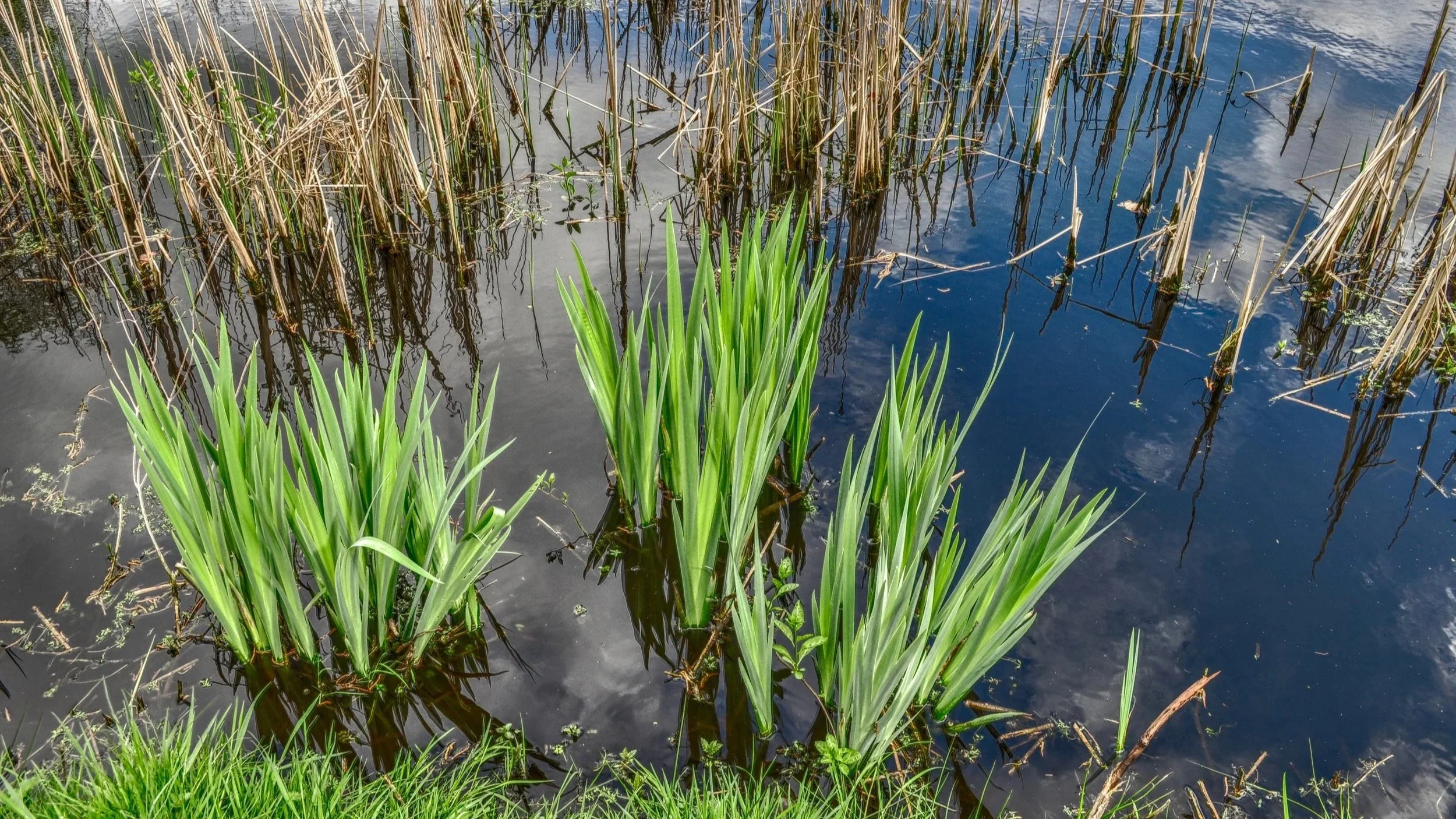
Assessing Sediment, Vegetation, and Restoration Needs
Begin with the approved documents
A useful assessment starts with drainage plans, available as-built drawings, the operation and maintenance agreement, inspection reports, and previous cleanout records. Together, these documents help establish what was constructed, what conditions must be maintained, who is responsible, and whether earlier modifications have changed the system.
Important reference information includes the forebay footprint, bottom elevation, intended storage, inlet locations, separator configuration, and designated maintenance access. The applicable maintenance plan may also establish a sediment depth or storage-loss threshold that triggers removal. Those requirements should guide the assessment rather than a generic recommendation applied to every pond.
When records are incomplete, document the uncertainty before pricing excavation. Field surveying, additional investigation, or engineering review may be needed to distinguish deposited material from the original bottom and establish an appropriate restoration limit. Uncertainty about the design should become a defined investigation task, not an assumption buried in the scope.
Measure accumulation instead of estimating from appearance
A visible sediment bar identifies a condition worth investigating, but it does not reveal the total volume beneath the water surface. An assessment should use a suitable measurement method to distinguish accumulated sediment from the underlying constructed surface wherever practicable.
Depending on conditions, that work may involve probing, depth measurements, survey points, or a more detailed sediment survey. Measurements should use consistent reference locations and elevations so later inspections can determine whether the forebay is filling slowly, rapidly, or unevenly. Water depth alone is insufficient if the water level has changed between visits.
Sediment quantity also needs a clear basis. In-place volume, excavated wet material, dewatered material, and trucked quantities are related but are not identical measures. A restoration proposal should explain how quantities are estimated and how any adjustment will be handled if field conditions differ from the investigation.
Inspect the full route through the forebay
The inspection should follow water from the contributing drainage area through the inlet, across the forebay, and into the main basin. This reveals whether sediment is merely collecting as expected or whether damaged infrastructure and active erosion are creating an additional maintenance burden.
Relevant observations include sediment fans, displaced inlet protection, exposed pipe joints, eroding banks, debris accumulations, damaged barriers, and scour where water leaves the forebay. A partially buried structure may need further investigation before excavation begins because sediment can conceal deterioration that affects the repair scope.
The surrounding landscape deserves equal attention. Unstabilized soil, shoreline erosion, failing channels, construction activity, or concentrated runoff can supply material faster than normal maintenance assumptions anticipate. Removing deposits without addressing an ongoing sediment source may restore capacity temporarily while leaving the refill rate unchanged.
Evaluate woody vegetation in its actual location
Woody vegetation requires a location-specific decision. Growth that blocks equipment access presents a different problem from a mature tree rooted in an embankment, and beneficial vegetation outside critical structures should not automatically be removed because a forebay needs maintenance.
Roots and stumps can complicate excavation, obscure structures, and make it harder to distinguish sediment from established ground. Where trees are associated with embankments or other structural features, removal can also disturb soil and create openings requiring a planned repair. Decaying roots may contribute to weaknesses, but the significance depends on their location and the structure involved.
For that reason, pulling stumps is not a substitute for evaluating the bank or embankment. Qualified review may be needed to determine whether vegetation should remain temporarily, how removal should proceed, and what backfilling, compaction, and stabilization are required afterward.
Turn findings into a prioritized scope
The assessment should separate routine debris removal from sediment cleanout, structural repair, vegetation management, and design questions. Owners need to understand which conditions affect immediate function, which require further investigation, and which can be included in scheduled maintenance.
A practical report pairs photographs and measurements with a mapped work area, access constraints, and recommended next steps. EI’s site-to-completion process connects that initial evaluation with a scope the field team and property owner can review together. The result should be a project defined by conditions and objectives, rather than a general instruction to clean the pond.
A Structured Forebay Restoration Process
Confirm the restoration limits and required approvals
Ecological Improvements approaches forebay restoration through assessment and mapping, targeted excavation, regrading, stabilization, and future maintenance planning. Before equipment mobilizes, those stages need to become a site-specific work plan with clear limits, responsibilities, and completion criteria.
The plan should identify the intended excavation footprint and elevations, infrastructure to protect, sediment handling areas, equipment access, and proposed bank repairs. If the project changes dimensions, modifies a separator, or alters how water moves through the system, engineering review may be necessary to distinguish maintenance from a design modification.
Approval requirements vary by jurisdiction, facility authorization, and the nature of the work. Sediment removal, water-level changes, work near wetlands or jurisdictional waters, and disposal activities may involve different requirements. Confirming the applicable process before mobilization helps avoid assuming that every existing stormwater feature can be excavated under the same maintenance provisions.
Plan access and manage water during construction
Access affects both feasibility and cost. A plan should consider equipment reach, ground conditions, buried utilities, haul routes, gates, nearby improvements, and the ability of the access surface to support anticipated loads. An access easement does not by itself establish that a route is suitable for heavy equipment.
Water management is another project-specific decision. Some work can proceed from the bank, while other conditions may require temporary isolation or controlled water-level management. The selected method should protect surrounding structures and account for incoming runoff, weather, downstream conditions, and applicable discharge requirements.
If water is pumped or sediment is dewatered, the handling method must address suspended solids and discharge location. Moving turbid water from the work area directly into the main pond or a downstream channel can transfer the problem rather than control it. Temporary measures should remain functional during the work and be removed or restored appropriately afterward.
Excavate accumulated material without overcutting
Targeted excavation removes sediment within the established limits while protecting the original bottom, liners where present, banks, pipes, and separation structures. Equipment selection depends on access, reach, sediment consistency, water conditions, and the sensitivity of adjacent features.
Excavation should be checked against the reference elevations during the project. A hard bottom may provide a useful limit where one was designed, but an unexpected firm layer should not automatically be assumed to be the approved excavation surface. Likewise, removing additional native soil to make the basin look deeper can change its geometry without improving the intended treatment function.
The work should also address the flow path. Where the scope includes repair, damaged inlet protection or separator features should be restored so runoff enters and leaves the forebay as intended. Completion should reflect the approved function, not simply the amount of material removed.
Establish a sediment handling and disposal route
Stormwater sediment can contain pollutants delivered by the contributing drainage area. Its appearance does not establish whether it is suitable for reuse, where it can be placed, or whether a receiving facility will accept it. Historical land use and potential pollutant sources help inform the appropriate characterization approach.
Testing and disposal requirements should be confirmed for the project and receiving location before excavation generates material that needs somewhere to go. Dewatering space, temporary stockpile protection, transport arrangements, and documentation should be incorporated into the plan. The Minnesota Pollution Control Agency’s sediment guidance provides a useful example of structured sediment management, although its jurisdiction-specific requirements do not apply nationwide. [2]
Regrade, stabilize, and document the result
Regrading restores the specified contours and transitions, followed by stabilization suited to the anticipated flow, slope, soil, and inundation. Some locations may support appropriate native vegetation, while concentrated-flow areas may require engineered protection. Planting alone should not be expected to resolve an unstable bank or an inadequately protected discharge point.
The finished project should leave a usable maintenance route and a defined forebay footprint. Closeout documentation should record final conditions, relevant measurements, sediment handling records, repaired features, and photographs from repeatable locations. Those records establish the baseline for the next inspection and make future maintenance decisions more reliable.
Long-Term Forebay Maintenance, Budgeting, and Performance
Set cleanout triggers using the facility’s requirements
Forebay maintenance should combine scheduled inspections with measurable action thresholds. The governing maintenance plan, permit conditions, and approved design should determine when sediment removal is due, while observed loading and condition changes help determine how frequently the site needs attention.
Some manuals use a percentage of sediment storage lost as a cleanout trigger, but the applicable percentage and method of calculation must be verified for the facility. For example, Philadelphia’s forebay guidance limits accumulated sediment to 50 percent of forebay volume and includes a time-based maintenance expectation. That is a jurisdiction-specific example, not a universal national rule. [3]
A forebay receiving runoff from a stable, established landscape may fill differently from one receiving sediment during active upstream construction. Inspection frequency should respond to those changes, and any more stringent inspection requirements remain applicable. Waiting for a calendar date can miss accelerated accumulation, while unnecessary excavation can add cost and disturbance.
Build an inspection record that supports decisions
A useful record identifies the asset, inspection date, water conditions, measurement locations, observed defects, and required follow-up. Photographs should be taken from consistent viewpoints, and sediment readings should be tied to stable references so year-to-year comparisons have meaning.
Inspections should check the inlet, available sediment storage, separator, bank stability, vegetation, debris, and maintenance access. The forebay should also be considered alongside the pond outlet and connected drainage infrastructure. A clean pretreatment area does not establish that every component downstream is functioning correctly.
After significant storms or changes in the contributing drainage area, additional observations can reveal new sediment deposits and damage. Clemson Extension recommends inspecting stormwater ponds at least twice annually and after large storms, while emphasizing that local requirements vary. A facility-specific plan may require a different or more frequent schedule. [4]
Address the source of rapid sediment accumulation
Repeated cleanouts at unexpectedly short intervals should prompt investigation upstream. Bare soil, eroding swales, unstable pond banks, failed inlet protection, and construction runoff can all increase sediment delivery. The forebay is the collection point, but the most effective corrective work may be elsewhere.
Permanent stormwater pretreatment also should not be treated as a replacement for construction-phase erosion and sediment controls. Stabilized disturbed areas, maintained perimeter controls, and properly managed construction entrances help reduce the material available for transport. The measures needed depend on the site and its applicable construction requirements.
EI’s erosion control and drainage solutions connect forebay maintenance with these broader source-control needs. Coordinating the work helps prevent a restoration project from becoming a repeated response to an unresolved upstream condition. It also supports clearer communication when separate property owners or contractors control different parts of the drainage area.
Budget for the whole maintenance activity
Forebay restoration cost depends on more than sediment quantity. Access preparation, water management, sediment characterization, disposal distance, bank repairs, vegetation work, temporary controls, and restoration of disturbed routes can materially affect the scope.
A useful proposal identifies the assumptions behind quantities, handling methods, and site conditions. It should explain what is included, how unforeseen conditions will be evaluated, and what evidence will establish completion. This allows owners to compare scopes on a consistent basis instead of comparing prices for different levels of work.
Long-term budgeting should distinguish routine inspection and debris removal from periodic excavation and structural repair. Concentrating sediment in an accessible forebay can make removal more manageable, but it does not guarantee a particular cost saving or eliminate eventual main-basin dredging. Reserve planning should reflect the full stormwater asset inventory and documented condition trends.
Verify results and plan the next inspection
Successful restoration leaves the forebay at the specified condition, with protected structures, stable disturbed areas, and an accessible route for future maintenance. Follow-up observations should confirm that stabilization is establishing and that runoff is moving through the intended path without new scour or bypassing.
Visual improvement is useful, but it is not proof of a particular pollutant-removal percentage or restored flood capacity. Those conclusions require appropriate design information, analysis, or monitoring. The most useful everyday evidence is a documented baseline followed by inspections that show how the restored feature is performing over time.
If sediment buildup, woody growth, or damaged features are making your forebay difficult to maintain, contact Ecological Improvements to discuss a forebay assessment. Our team evaluates the pretreatment area in the context of the connected stormwater system, helping define restoration priorities and a practical path for continued maintenance.
Technical References
Clemson Extension: Stormwater Ponds, A Guide for Pond Owners
Minnesota Pollution Control Agency: Managing Stormwater Sediment, Best Management Practices Guidance
Philadelphia Water Department: Pretreatment, Forebay Maintenance Guidance
Clemson Extension: Stormwater Ponds, Inspection and Maintenance Considerations