Native Buffer Zones for Stormwater Ponds
If you want to transform the performance of a stormwater pond without excavating sediment or modifying outlet structures, start at the edge. Native buffer zones around stormwater ponds are one of the most powerful and cost-effective tools available for improving water quality, reducing erosion, and increasing long-term system resilience.
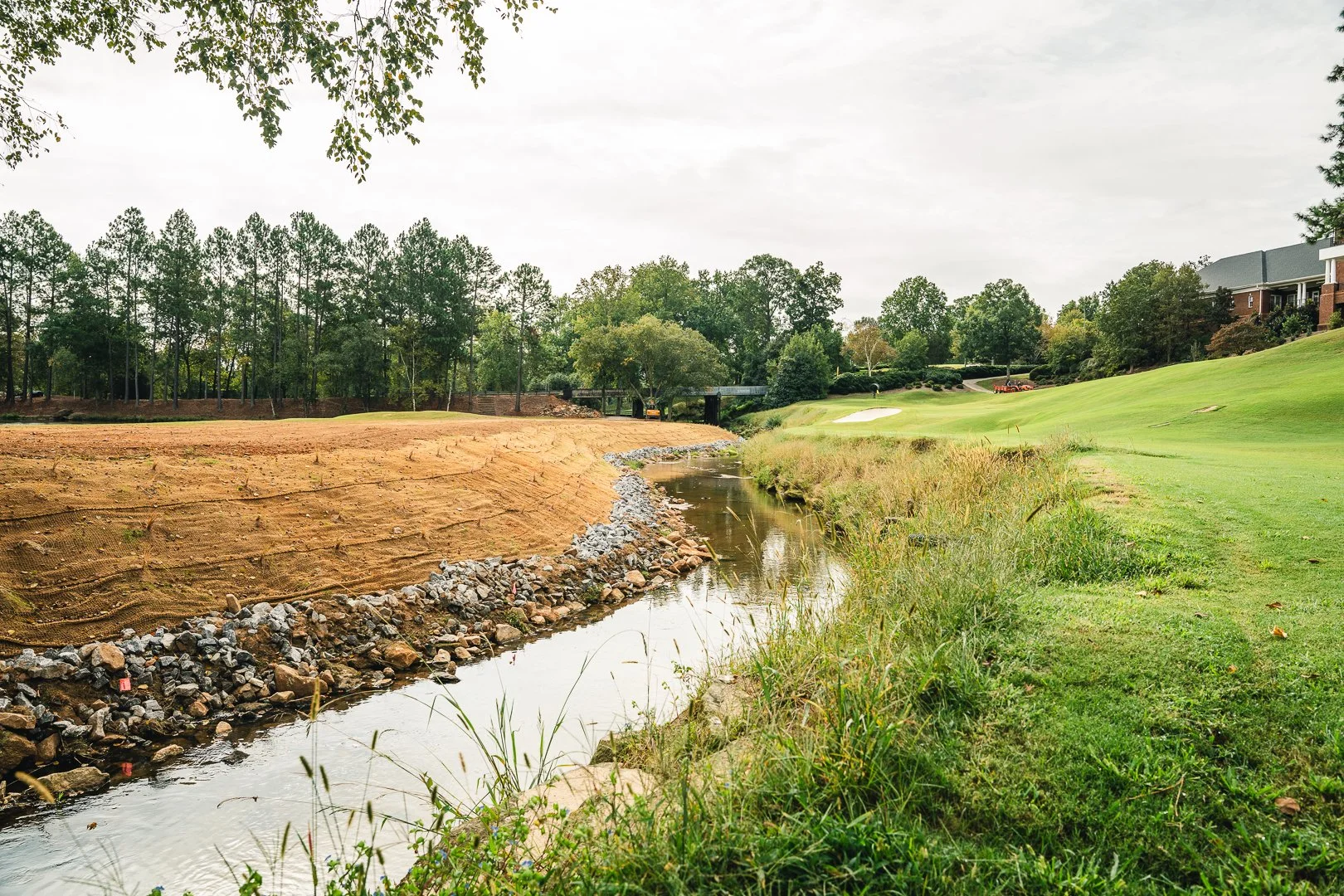
A well-designed stormwater pond buffer is not simply a strip of tall vegetation. It is a layered, engineered ecological system designed to intercept runoff, stabilize soils, and support regulatory performance. When properly planned and installed, a native buffer functions as a living filter, a structural reinforcement system, and a long-term maintenance strategy.
At Ecological Improvements, we approach native buffer design with the same discipline applied to hydraulic and structural elements of a BMP. We rely on regionally appropriate, research-backed plant selection and practical site analysis to ensure buffers enhance performance rather than interfere with access, inspections, or compliance. This page serves as a comprehensive resource on native buffer zones for stormwater ponds, explaining how they function, why they outperform turf edges, and how they should be designed for HOAs, municipalities, developers, and commercial properties.
Why Stormwater Pond Buffer Zones Matter More Than Most Realize
Stormwater ponds are designed to detain runoff, settle sediment, and manage discharge rates. However, the majority of pollutants entering a pond originate from surface runoff before water reaches open water. Fertilizers, pet waste, hydrocarbons, sediment, and organic debris are transported across upland areas and delivered to the pond edge. The condition of that edge determines whether pollutants are filtered or directly discharged into the basin.
A native buffer zone functions as a biological pretreatment system. Vegetation slows runoff velocity, allowing sediment to settle before reaching the water. Root systems capture and absorb nutrients such as nitrogen and phosphorus. Soil microorganisms within the buffer facilitate nutrient transformation and breakdown of organic matter.
Without a buffer, runoff moves rapidly across compacted turf and enters the pond with minimal filtration. This increases turbidity, accelerates nutrient loading, and elevates the risk of algae blooms. Over time, this dynamic contributes to sediment accumulation and water quality decline.
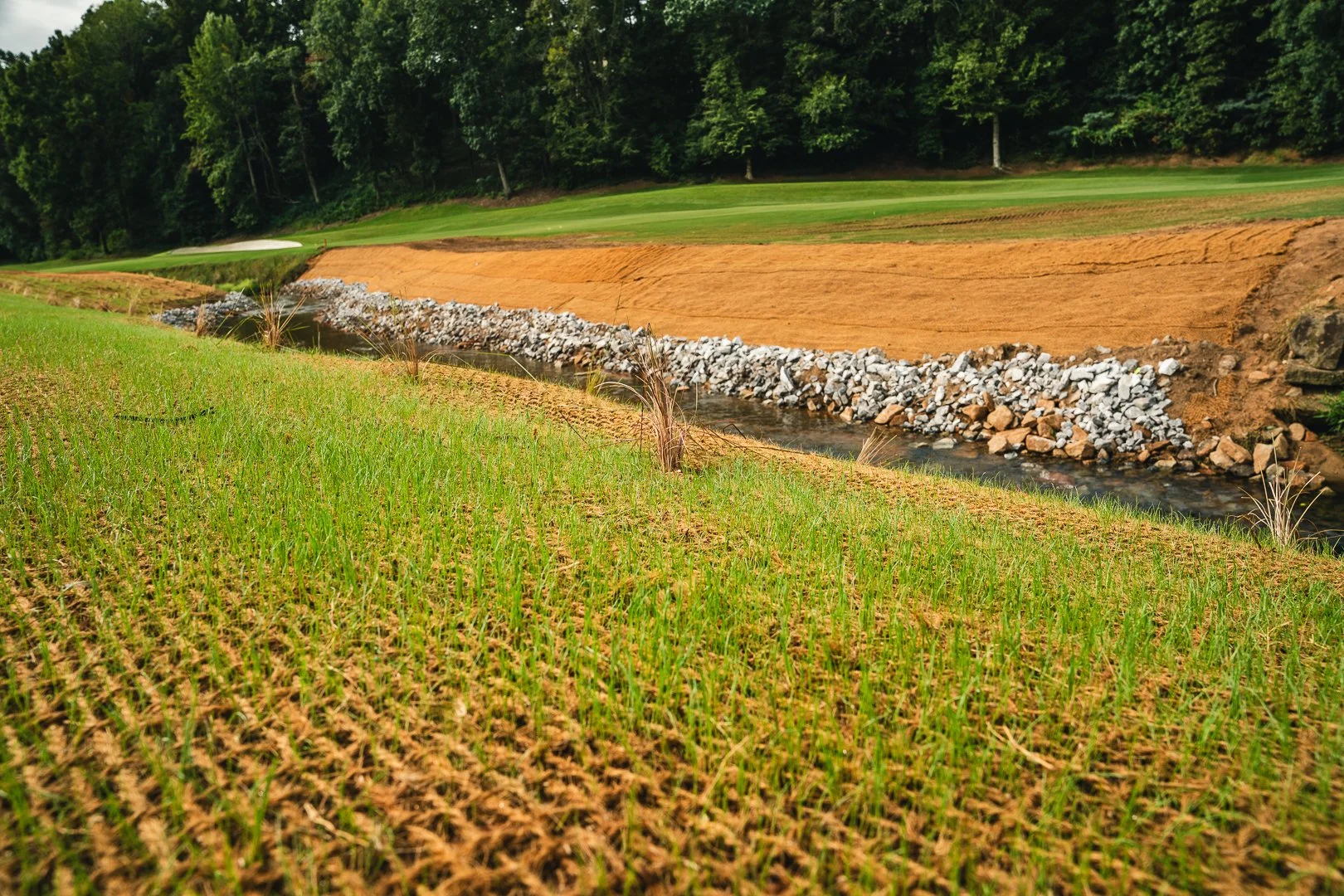
From a structural standpoint, buffers protect the shoreline from wave energy and fluctuating water levels. Turfgrass has shallow root systems and provides limited soil reinforcement. Native species, particularly those adapted to wet-dry cycles, develop deeper and more fibrous root networks that anchor soils effectively.
Buffers also influence hydrologic timing. By increasing infiltration and surface roughness, they reduce the intensity of inflow during storm events. This moderation protects forebays and treatment zones from excessive hydraulic stress.
When viewed through a systems lens, buffer zones are not aesthetic enhancements. They are foundational performance components of a well-functioning stormwater pond.
The Layered Structure of an Effective Native Buffer Zone
A high-performing stormwater pond buffer is organized into functional layers, each aligned with hydrologic gradients and site conditions. These layers work together to intercept runoff, stabilize soil, and maintain ecological balance.
Shoreline Stabilization Layer
Closest to the waterline, the stabilization layer consists of wetland and marginal species capable of tolerating fluctuating water levels. These plants are exposed to wave action, seasonal water level changes, and periodic inundation.
Deeply rooted species in this zone reduce toe erosion and prevent undercutting. Their stems break wave energy before it reaches exposed soil. In contrast to turfgrass, which often thins at the water’s edge, native wetland plants remain robust under hydraulic stress.
This layer is particularly important in ponds with significant wind fetch or rapid inflow events. Without it, shoreline erosion accelerates, increasing sediment loading and structural repair costs.
Transitional Filtration Layer
Moving upslope, the transitional layer includes grasses, sedges, and flowering perennials adapted to intermittent saturation. This is the primary filtration zone.
Here, vegetation slows sheet flow and traps sediment particles carried from surrounding landscapes. The density of above-ground biomass and the complexity of root systems create resistance that encourages infiltration and pollutant capture.
This layer is critical for nutrient management. Fertilizer runoff from adjacent turf, landscaping, or golf courses is intercepted before entering the pond. Over time, this significantly reduces algae pressure and improves water clarity.
Upland Integration Layer
At the outer edge of the buffer, the upland integration layer blends into the surrounding landscape. Plants in this zone tolerate occasional moisture but primarily stabilize soils under normal conditions.
This layer defines mowing boundaries, protects the inner buffer from encroachment, and provides visual transition between maintained turf and naturalized shoreline.
When designed intentionally, these three layers function as a unified system rather than isolated plantings.
Water Quality Benefits of Native Buffer Zones
One of the most measurable benefits of a native buffer is improved water quality. Buffers intercept nonpoint source pollutants before they reach open water, reducing treatment burden within the pond itself.
Sediment reduction is the first and most visible improvement. Slowed runoff allows particulate matter to settle within the buffer rather than entering the basin. This reduces turbidity and extends the functional life of forebays.
Nutrient interception is equally important. Nitrogen and phosphorus, common in residential and commercial runoff, are primary drivers of algae growth. Buffer vegetation absorbs these nutrients directly and supports microbial communities that transform and immobilize them.
Increased infiltration within the buffer reduces the volume and velocity of inflow. This moderation stabilizes pond hydraulics and supports more consistent treatment performance.
Importantly, buffers provide passive treatment. Once established, they function continuously without mechanical input or energy costs. Over time, they become more effective as root systems mature and soil health improves.
Erosion Control and Structural Stability Through Vegetation
Shoreline erosion is one of the most common and expensive stormwater pond maintenance challenges. Repeated wave impact, fluctuating water levels, and foot traffic weaken banks over time.
Native buffer zones address these pressures directly. Root systems create soil reinforcement similar to natural geotextile networks. Fibrous roots interlock with soil particles, increasing shear strength and reducing susceptibility to slumping.
Above-ground biomass reduces wave impact and dissipates energy. Even moderate vegetation density can significantly reduce erosive forces compared to bare soil or turf edges.
Buffers also reduce compaction caused by mowing equipment and foot traffic. By defining clear buffer boundaries, maintenance crews are less likely to over-mow or encroach on sensitive shoreline areas.
In many cases, installing a buffer is more cost-effective and sustainable than repeated hard armoring with riprap or structural materials.
Human and Aesthetic Considerations
Stormwater ponds are highly visible features within communities and commercial properties. Their appearance influences perceptions of property value and management quality.
Native buffers, when designed thoughtfully, enhance visual interest through seasonal color, texture, and movement. Flowering species provide dynamic visual change throughout the year.
Buffers also create habitat for birds, pollinators, and beneficial wildlife. This ecological function can become a community amenity rather than a maintenance concern.
Importantly, well-designed buffers respect sightlines and access. Strategic plant placement maintains view corridors and preserves accessibility for inspections and emergency response.
Clear signage and resident education further support buffer success. When communities understand the purpose of the buffer, compliance and long-term stability improve.
Designing Buffers for Access, Inspection, and Compliance
Stormwater ponds require regular inspection and maintenance. Buffer zones must support these activities rather than obstruct them.
At Ecological Improvements, buffer designs incorporate defined access points, reinforced inspection corridors, and clear visibility of control structures. Plant density is calibrated to balance filtration with maintainability.
Mowing boundaries are established to prevent accidental encroachment. In some cases, physical markers or subtle grade transitions reinforce buffer limits.
Designing for maintenance reduces long-term conflict between ecological performance and operational needs.
Common Mistakes in Buffer Implementation
Poorly executed buffers can create challenges. Common mistakes include planting inappropriate species, failing to prepare soils adequately, and ignoring maintenance planning.
Buffers that are too narrow provide limited benefit. Conversely, overly dense plantings that block access create compliance concerns.
Failure to manage invasive species early allows them to dominate disturbed soils. Early intervention and ongoing monitoring are essential.
Effective buffer implementation requires both ecological knowledge and practical field experience.
Long-Term Performance and Adaptive Management
Native buffers improve with time when properly maintained. Root systems deepen, soil structure improves, and plant communities become more resilient.
Routine inspections assess plant health, invasive pressure, and erosion patterns. Adjustments can be made to strengthen weak areas or refine boundaries.
Adaptive management ensures that buffers continue to support pond performance as site conditions evolve.
Ecological Improvements’ Approach to Native Buffer Zones
Ecological Improvements designs stormwater pond buffer zones as functional infrastructure. Our approach integrates hydrology, soil science, plant ecology, and maintenance planning.
We prioritize regionally appropriate native species, layered planting strategies, and clear maintenance integration. Each buffer is tailored to the specific site, balancing water quality goals, erosion control needs, and community expectations.
Our objective is not simply to install plants, but to establish living systems that reduce risk, enhance aesthetics, and support long-term BMP performance.
Contact Us!
If your stormwater pond has persistent algae issues, eroding shorelines, or declining water clarity, a properly designed native buffer zone may provide a durable solution. Ecological Improvements develops and installs system-based buffer designs that improve water quality and stabilize banks without structural reconstruction. Contact our team to evaluate your pond edge and determine how a native buffer can enhance long-term performance.