Stormwater Pond Budget Planning
Managing a stormwater pond is not simply about responding to problems as they appear. It is about protecting an engineered asset that plays a critical role in flood control, erosion prevention, and water quality. For HOAs, golf courses, municipalities, commercial property owners, and developers, the challenge is often balancing necessary maintenance with annual budget constraints.
Many property managers recognize that their stormwater ponds need attention, but not every community has the financial flexibility to complete every improvement in a single year. Fortunately, effective stormwater management does not require addressing every issue at once. With the right planning, improvements can be prioritized, phased, and scheduled over multiple budget cycles while still protecting the overall health of the system.
At Ecological Improvements, we help clients develop practical, long-term maintenance strategies that align with both operational goals and financial realities. Rather than recommending large-scale projects when smaller, targeted improvements can stabilize a system, we evaluate each stormwater pond individually and develop a phased approach that addresses immediate concerns while establishing a roadmap for future work.
Stormwater ponds are dynamic systems. Shorelines naturally experience erosion, sediment gradually accumulates, vegetation changes over time, and drainage structures age. Waiting until multiple issues develop often results in larger restoration projects that require significantly greater investment. By planning maintenance proactively, property owners can spread costs over several years while preserving infrastructure performance and reducing the likelihood of emergency repairs.
A phased budgeting strategy allows communities to make steady progress without sacrificing the long-term function of their stormwater management system.

Why Proactive Budget Planning Matters for Stormwater Ponds
Stormwater ponds are designed to operate continuously. Every rainfall event introduces runoff, sediment, nutrients, and debris into the system. Over time, these natural processes slowly change how a pond functions.
Unlike buildings or roadways, stormwater ponds often deteriorate gradually. Minor shoreline erosion, small areas of invasive vegetation, or moderate sediment accumulation may not appear urgent individually. However, when multiple maintenance needs are ignored over several years, they often combine to create far more complex and expensive restoration projects.
Proactive budgeting allows property owners to intervene before these conditions significantly impact performance.
Preventing Small Problems from Becoming Major Projects
Many stormwater pond failures begin with relatively minor maintenance issues.
A small area of shoreline erosion can gradually expand during repeated storm events. Sediment entering the pond from unstable banks reduces storage capacity while increasing turbidity. Invasive vegetation spreads into healthy plant communities, affecting water flow and maintenance access. Drainage structures become partially obstructed by accumulated debris.
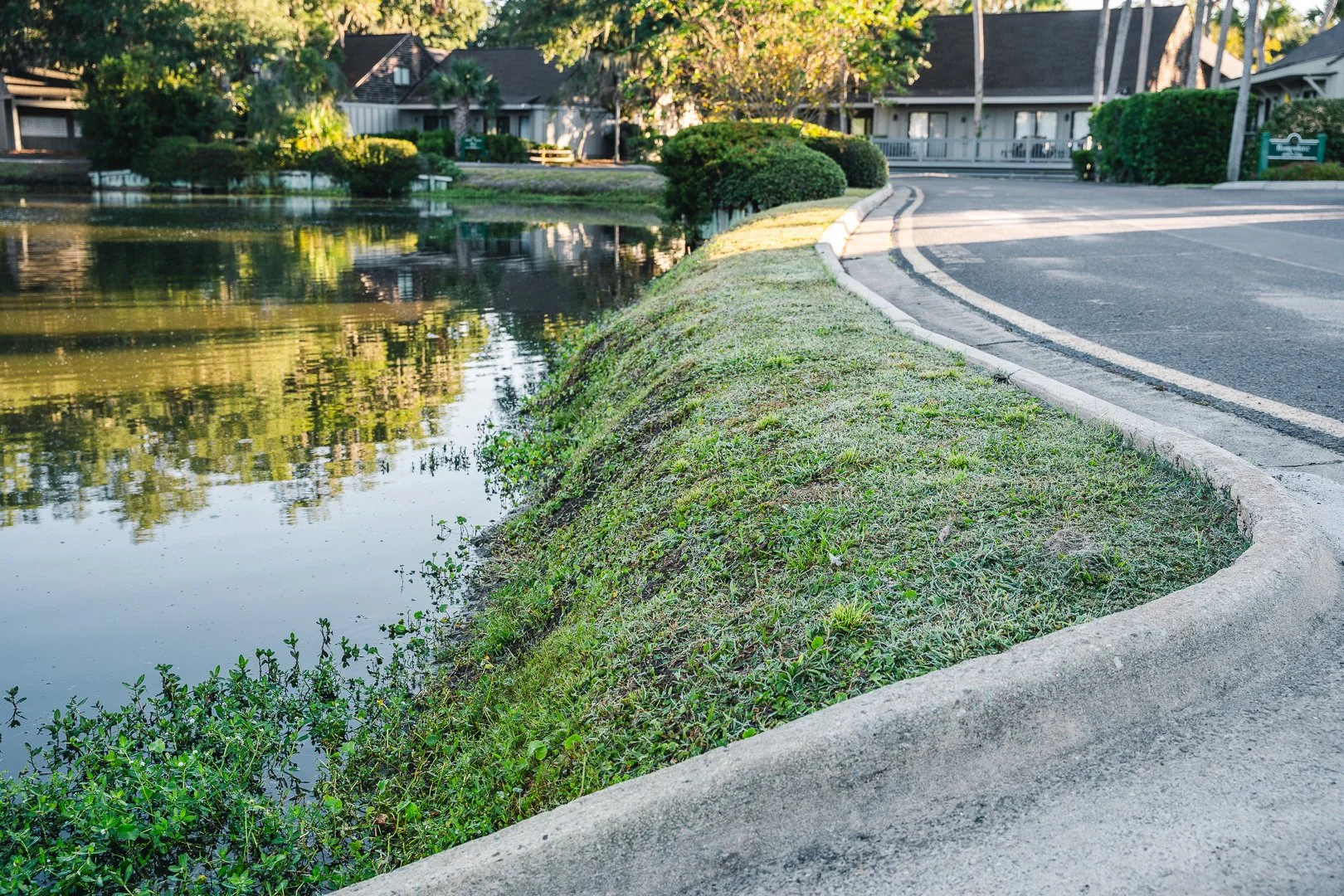
Each issue develops incrementally, making it easy to postpone maintenance. Unfortunately, postponing repairs often increases future costs.
For example, stabilizing a localized section of shoreline today may prevent widespread bank failure that would eventually require reconstruction. Clearing an outfall before restrictions develop may eliminate the need for more extensive structural repairs later.
Routine inspections and phased maintenance help identify these opportunities before conditions worsen.
Aligning Maintenance with Annual Budgets
Most HOAs, municipalities, golf courses, and commercial property owners operate within annual capital improvement or maintenance budgets. Large, unexpected stormwater restoration projects can disrupt financial planning and force difficult decisions about competing infrastructure priorities.
Developing a multi-year maintenance strategy allows organizations to distribute improvements over several budget cycles while addressing the highest-priority needs first.
Instead of approaching maintenance reactively, decision-makers gain a predictable roadmap that supports long-term financial planning.
Phase 1: Assess the Entire Stormwater System
Every successful maintenance plan begins with understanding the current condition of the pond.
Rather than immediately recommending repairs, Ecological Improvements starts with a comprehensive evaluation of the stormwater system. This assessment provides the information necessary to prioritize projects based on risk, infrastructure condition, regulatory considerations, and long-term performance.
Conducting a Comprehensive Site Assessment
A thorough inspection evaluates far more than the visible shoreline.
Our team examines:
Shoreline stability
Active erosion areas
Sediment accumulation
Inlet and outlet structures
Spillways
Vegetation health
Invasive plant growth
Stormwater conveyance systems
Evidence of structural deterioration
Water flow patterns
Maintenance accessibility
Evaluating the entire system helps identify both existing deficiencies and conditions that could develop into future maintenance concerns.
Prioritizing Immediate and Long-Term Needs
Not every issue requires immediate correction. Following the assessment, maintenance recommendations are organized according to priority.
Immediate concerns typically include infrastructure failures, severe erosion, compromised drainage structures, or conditions affecting public safety or regulatory compliance.
Other recommendations may involve vegetation management, shoreline improvements, sediment monitoring, or future stabilization projects that can reasonably be scheduled over the next several years.
This prioritization allows property owners to allocate resources where they will have the greatest impact.
Phase 2: Address High-Priority Infrastructure
Once critical issues have been identified, the next step is protecting the areas most likely to experience continued deterioration.
The objective is not to complete every improvement immediately but to prevent conditions from worsening while preserving the overall function of the stormwater system.
Stabilizing High-Risk Areas First
Certain portions of a pond experience greater hydraulic stress than others.
Steep embankments, concentrated discharge points, outlet structures, and areas exposed to continuous wave action often deteriorate more rapidly.
Addressing these locations first helps prevent additional sediment from entering the pond while reducing the likelihood of larger structural failures.
Depending on site conditions, stabilization methods may include:
Shore mesh systems
Native vegetation establishment
Riprap with geotextile reinforcement
Erosion control blankets
Articulated concrete block systems
Bioengineering techniques
Selecting the appropriate stabilization method depends on slope, soil composition, hydraulic conditions, maintenance requirements, and long-term performance objectives.
Protecting Existing Infrastructure
Stormwater ponds function as interconnected systems. Stabilizing a failing outfall, repairing damaged headwalls, restoring conveyance channels, or reinforcing embankments often protects other components throughout the drainage network.
By focusing on infrastructure that influences overall system performance, property owners maximize the value of each maintenance investment.
Phase 3: Complete Improvements Through Planned Budget Cycles
After high-priority deficiencies have been addressed, remaining improvements can be completed in manageable phases. This approach allows communities to continue improving infrastructure without requiring large one-time expenditures.
Stabilizing Shorelines Incrementally
Rather than restoring an entire shoreline at once, many clients choose to complete stabilization in sections.
For example, a community may stabilize approximately 200 linear feet of shoreline each budget year until the entire pond has been improved.
This strategy provides several advantages. Maintenance costs become more predictable. Work can be scheduled around seasonal conditions. Budget planning becomes easier for boards and facility managers.Infrastructure steadily improves rather than remaining deferred indefinitely.
Selecting Solutions That Balance Performance and Cost
Every shoreline does not require the same level of reinforcement. Lower-energy areas may perform well with native vegetation and erosion control matting. Higher-energy shorelines experiencing continuous hydraulic forces may require more robust stabilization methods such as riprap, reinforced soils, or articulated concrete block systems.
Matching the solution to the specific site conditions allows clients to invest where engineering demands it while avoiding unnecessary construction elsewhere.
Phase 4: Transition from Restoration to Preventative Maintenance
Once major stabilization work has been completed, the focus shifts toward preserving the improvements already made.
Preventative maintenance extends infrastructure life while reducing the likelihood of future restoration projects.
Establishing Routine Maintenance
Healthy stormwater ponds benefit from recurring maintenance activities including:
Annual inspections
Vegetation management
Debris removal
Sediment monitoring
Outlet structure inspections
Shoreline evaluations
Invasive species management
These services help identify developing issues before they affect overall system performance.
Routine maintenance also provides valuable documentation for long-term planning and regulatory compliance.
Investing in Long-Term Enhancements
As maintenance needs become more predictable, communities often choose to implement improvements that further increase pond performance.
Potential enhancements may include:
Aeration systems
Native shoreline plantings
Nutrient-reducing vegetation
Habitat restoration
Water quality improvements
Additional erosion control measures
While these projects may not be immediately necessary, they contribute to improved water quality, enhanced aesthetics, and greater ecological function over time.
Why a Phased Budgeting Strategy Reduces Long-Term Costs
One of the greatest advantages of phased maintenance is avoiding large, unplanned capital expenditures.
Stormwater ponds that receive little attention for many years often require extensive dredging, complete shoreline reconstruction, or major infrastructure replacement once problems become severe.
These projects can represent a substantial financial burden compared to the cost of routine maintenance performed consistently over time.
A proactive maintenance strategy helps communities avoid this cycle.
Instead of reacting to infrastructure failures, property owners steadily invest in inspections, erosion control, vegetation management, and targeted repairs that preserve overall system performance.
This approach provides several long-term benefits:
More predictable maintenance budgets
Reduced emergency repair costs
Extended infrastructure lifespan
Improved water quality
Better regulatory compliance
Reduced erosion and sediment transport
Improved community appearance
Greater confidence in long-term asset management
At Ecological Improvements, we recognize that every client's financial situation is different. Our goal is to develop maintenance strategies that are technically sound, financially practical, and designed to protect stormwater infrastructure for decades rather than budget cycles.
Build a Long-Term Stormwater Maintenance Plan with Ecological Improvements
Stormwater ponds require ongoing attention, but that does not mean every improvement must happen immediately. A phased budgeting strategy allows communities to prioritize critical repairs, distribute costs over time, and maintain system performance without overwhelming annual budgets.
Ecological Improvements partners with HOAs, municipalities, golf courses, commercial property owners, and developers to create practical maintenance roadmaps based on each property's unique conditions. Through comprehensive inspections, prioritized recommendations, shoreline stabilization, erosion control, vegetation management, and long-term maintenance planning, we help clients protect their infrastructure while making informed investment decisions.
If you're planning future stormwater improvements or developing next year's maintenance budget, contact Ecological Improvements to schedule a comprehensive stormwater pond assessment and begin building a maintenance strategy designed for long-term success.