Stormwater Pond Planting: Designing Vegetation as Functional Infrastructure
Stormwater pond planting is often misunderstood as a purely aesthetic exercise. In practice, it is a core component of stormwater infrastructure performance. Vegetation in and around a stormwater pond directly influences erosion control, sediment management, water quality, habitat function, and long-term maintenance requirements. When planting is treated as landscaping alone, ponds struggle. When planting is treated as infrastructure, ponds become more stable, resilient, and cost-effective to maintain.
At Ecological Improvements, stormwater pond planting is approached as a system-based design process. Species selection, planting density, and spatial layout are all driven by function first and appearance second. Our designs are informed by regionally relevant research, including guidance supported by Clemson University, and implemented through trusted regional partners such as Charleston Aquatic Environment Nursery. The result is vegetation that is adapted to local conditions, performs predictably under hydraulic stress, and improves with time rather than degrading.
This page serves as a definitive resource on stormwater pond planting. It explains how planting zones function, why plant diversity matters, what competitors often overlook, and how properly designed vegetation systems protect both performance and property value.

Why Stormwater Pond Planting Is a Structural Decision
Stormwater ponds are engineered systems that rely on biological components to function correctly. Soil stability, nutrient uptake, and hydraulic energy dissipation are all influenced by vegetation. When vegetation fails or is poorly selected, the system compensates through increased erosion, sediment transport, and maintenance demand.
Plant roots provide tensile strength to soils, particularly in fluctuating water conditions where mechanical stabilization alone is insufficient. Above-ground biomass slows water movement, reducing erosive force during storm events. Leaves and stems intercept sediment and nutrients before they reach open water, supporting treatment objectives.
From a regulatory perspective, vegetation also supports compliance. Many stormwater permits assume vegetative stabilization as part of BMP performance. Poor plant establishment can compromise both inspection outcomes and long-term compliance.
Treating planting as infrastructure ensures that these functions are intentionally designed rather than left to chance.
Understanding Stormwater Pond Planting Zones
Effective stormwater pond planting begins with an understanding of hydrologic zones. Each zone experiences different water depths, saturation frequencies, and energy levels. Planting without respecting these zones often leads to high mortality, invasive establishment, and erosion.
Deep Water and Shelf Zone
The deep water and shelf zone includes permanently inundated areas and shallow shelves just below the normal pool elevation. These zones experience constant or frequent water coverage and are subject to wave action and fluctuating water levels.
Plants selected for this zone must tolerate inundation while contributing to stabilization and oxygen exchange. Species such as pickerelweed, arrowhead, and softstem bulrush are well suited to these conditions. Their rhizomatous root systems bind submerged soils, reducing resuspension of fine sediments.
Above the waterline, stems slow wave energy and reduce shoreline scour. This function is particularly important in ponds exposed to wind fetch or rapid inflow events. Properly established shelf vegetation reduces the need for hard armoring while maintaining treatment volume.
Design considerations in this zone include planting density, water depth tolerance, and access for inspection of inlet and outlet structures. Vegetation must enhance function without obstructing critical infrastructure.
Shallow Fringe and Shoreline Zone as the Erosion Control Engine
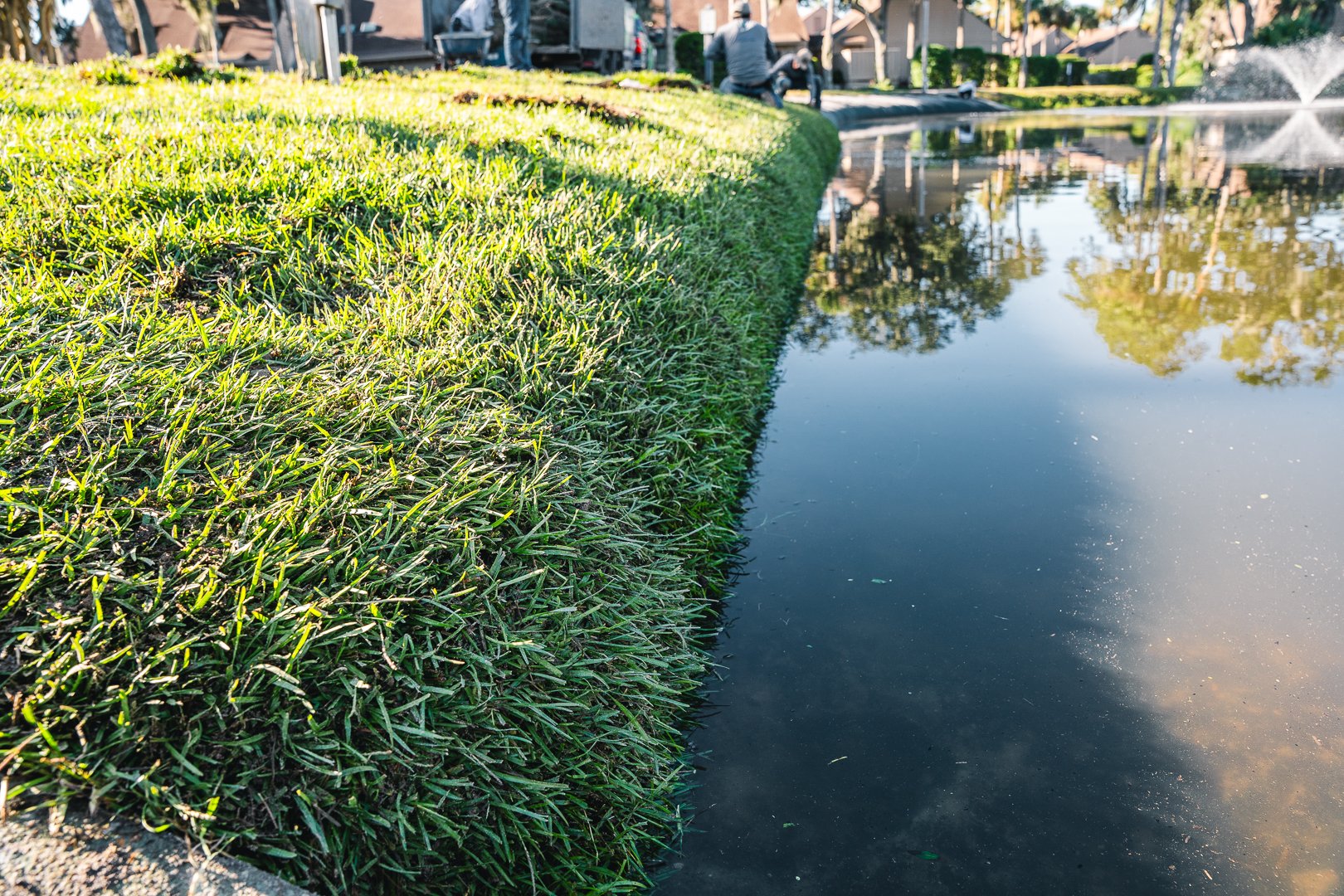
The shallow fringe and shoreline zone is the most critical area for erosion control. This transitional band experiences wet-dry cycles, wave impact, and concentrated hydraulic stress. Failures in this zone often lead directly to bank erosion and sediment loading.
Plants selected for the shoreline zone must tolerate fluctuating moisture conditions and provide dense root reinforcement. Species such as blueflag iris, soft rush, and lizard’s tail excel in this role. Their fibrous root systems knit soils together while their above-ground structure breaks wave energy and traps sediment.
This zone also serves as a biological buffer. Dense vegetation reduces the velocity of sheet flow entering the pond, filtering sediment and nutrients before they reach open water. When properly designed, shoreline plantings significantly reduce toe erosion and bank undercutting.
Competitors often underplant this zone or rely on turf grasses that lack deep root systems. Over time, these approaches fail, requiring repeated repairs. A robust shoreline planting is one of the most cost-effective investments in long-term pond stability.
Upper Bank and Upland Transition Zones
Above the shoreline, the upper bank and upland transition zones manage sheet flow before it enters the pond. These areas experience less frequent saturation but still play a critical role in erosion control and water quality.
Native grasses, sedges, and flowering perennials are selected for their ability to tolerate occasional inundation while maintaining dense root networks. These plants slow runoff, promote infiltration, and capture fine sediments and nutrients.
The upland transition zone also provides visual continuity between the pond and surrounding landscape. When designed intentionally, it creates a naturalized appearance that is often preferred by residents and stakeholders over manicured turf.
From a maintenance perspective, this zone must balance function with access. Plantings are arranged to allow inspection, mowing where appropriate, and repair activities without compromising stabilization.
Plant Diversity as a Resilience Strategy
Monocultures are a common failure point in stormwater pond planting. While single-species plantings may establish quickly, they are highly vulnerable to disease, pests, and environmental stress. When a monoculture fails, large areas of the pond are exposed simultaneously.
Diverse plant communities distribute risk. Different species respond differently to drought, inundation, temperature extremes, and nutrient loads. This diversity increases overall system resilience and reduces the likelihood of widespread failure.
Plant diversity also supports ecological function. Insects, birds, and aquatic organisms rely on a range of plant structures and phenologies. These biological interactions contribute to nutrient cycling and system stability.
From a visual standpoint, diverse plantings create a more natural appearance that evolves seasonally. This aesthetic improvement often translates directly into higher perceived property value.
Avoiding Common Stormwater Pond Planting Mistakes
Many stormwater pond planting failures stem from predictable mistakes. One of the most common is selecting plants based solely on appearance rather than hydrologic tolerance. Plants that look appealing in a nursery setting may fail quickly under real stormwater conditions.
Another frequent issue is ignoring maintenance realities. Dense plantings that block access to control structures or outfalls create inspection and compliance challenges. Effective designs anticipate future maintenance needs and incorporate clear access corridors.
Improper planting timing is another overlooked factor. Installing vegetation outside optimal seasonal windows reduces establishment success and increases replacement costs.
Finally, failure to manage invasive species early allows them to dominate disturbed areas. Invasive plants often establish faster than natives, but they provide inferior stabilization and complicate long-term management.
Sourcing Regionally Appropriate Native Plants
Plant sourcing is as important as plant selection. Native species adapted to local climate, soils, and hydrology establish more reliably and require less intervention over time.
By working with Charleston Aquatic Environment Nursery, Ecological Improvements sources plants that are verified for regional suitability and stormwater performance. These plants are grown with local conditions in mind rather than selected solely for catalog appeal.
Regionally adapted plants develop deeper root systems, tolerate climatic variability, and integrate more effectively into existing ecosystems. This reduces replacement rates and long-term maintenance costs.
Integrating Planting With Inspection and Maintenance
Stormwater pond planting does not exist in isolation. It must integrate with inspection protocols and maintenance plans. Plant layout must allow clear sightlines to control structures, embankments, and outfalls.
Routine inspections evaluate plant health, invasive pressure, and erosion patterns. These observations inform adaptive management, allowing plant communities to be adjusted as conditions change.
Designing planting as part of a broader BMP lifecycle ensures that vegetation continues to support system performance rather than becoming an obstacle.
Regulatory and Compliance Considerations
Many stormwater permits implicitly or explicitly rely on vegetative stabilization as part of BMP performance. Poorly established or failing vegetation can trigger inspection findings and corrective actions.
Documented planting plans, species lists, and maintenance strategies demonstrate due diligence. They also provide valuable context during regulatory reviews or property transfers.
A well-designed planting strategy supports compliance while reducing long-term risk.
Long-Term Value of Functional Stormwater Pond Planting
Stormwater ponds are highly visible features. Their condition influences how a property is perceived by residents, tenants, inspectors, and investors. Healthy, stable vegetation signals proactive management and long-term planning.
Conversely, eroding banks, invasive overgrowth, and failing plantings suggest deferred maintenance and hidden liabilities. These perceptions directly affect property value and risk exposure.
Functional planting protects infrastructure, enhances aesthetics, and improves ecological performance simultaneously.
Ecological Improvements’ Approach to Stormwater Pond Planting
Ecological Improvements treats stormwater pond planting as engineered ecological infrastructure. Our approach integrates hydrology, soil science, plant ecology, and maintenance planning into a cohesive system.
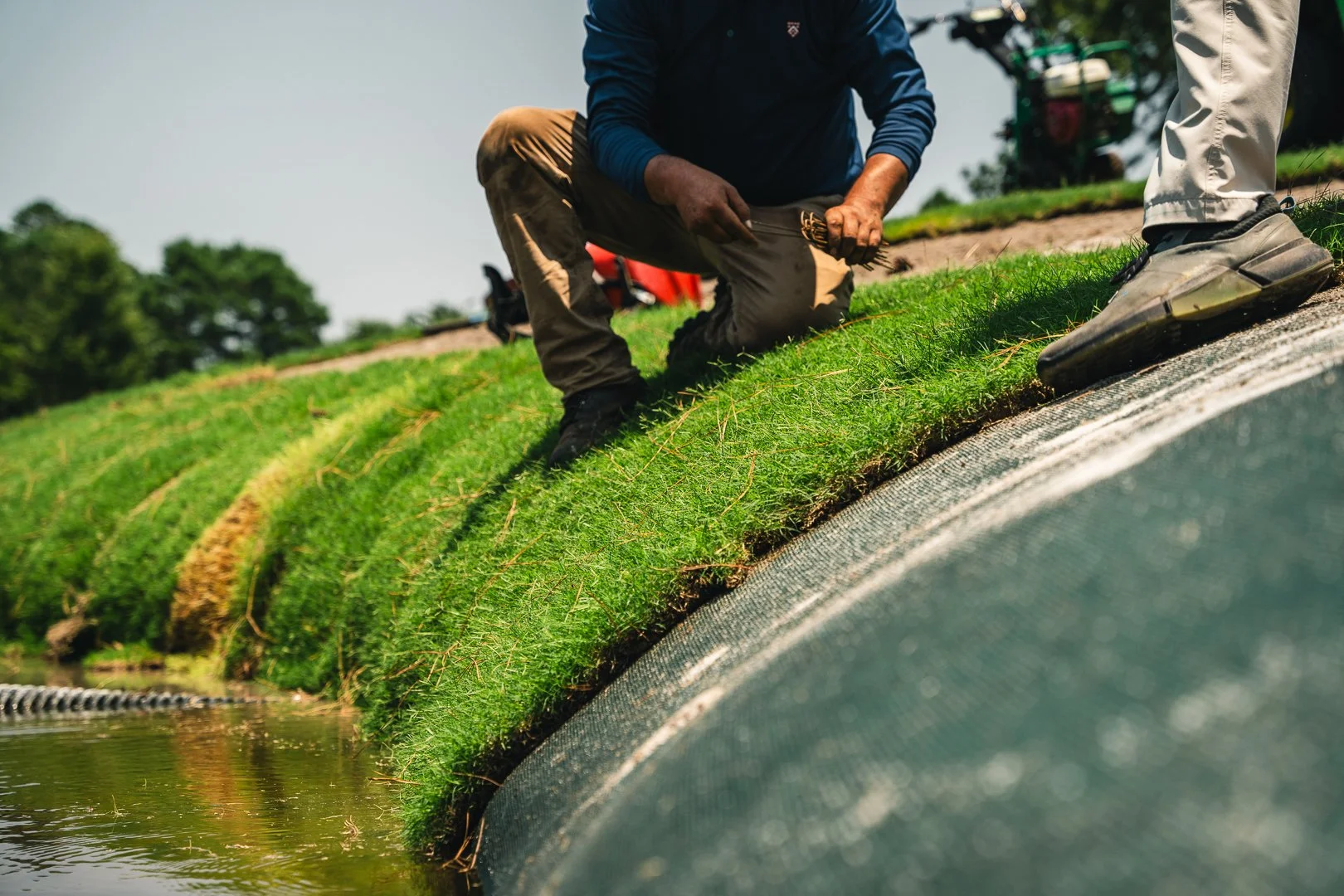
By grounding designs in regionally supported guidance and sourcing appropriate native species, we deliver plant communities that perform reliably and mature gracefully. Our focus is not short-term appearance, but long-term function.
Contact Us!
If your stormwater pond planting is underperforming, eroding, or difficult to maintain, a system-based planting strategy can restore function and stability. Ecological Improvements designs and installs stormwater pond vegetation that supports erosion control, water quality, and long-term asset value. Contact our team to evaluate your pond and develop a planting plan that treats vegetation as infrastructure.