Stormwater Pond Restoration Without Full Dredging: A Targeted, System-Based Approach
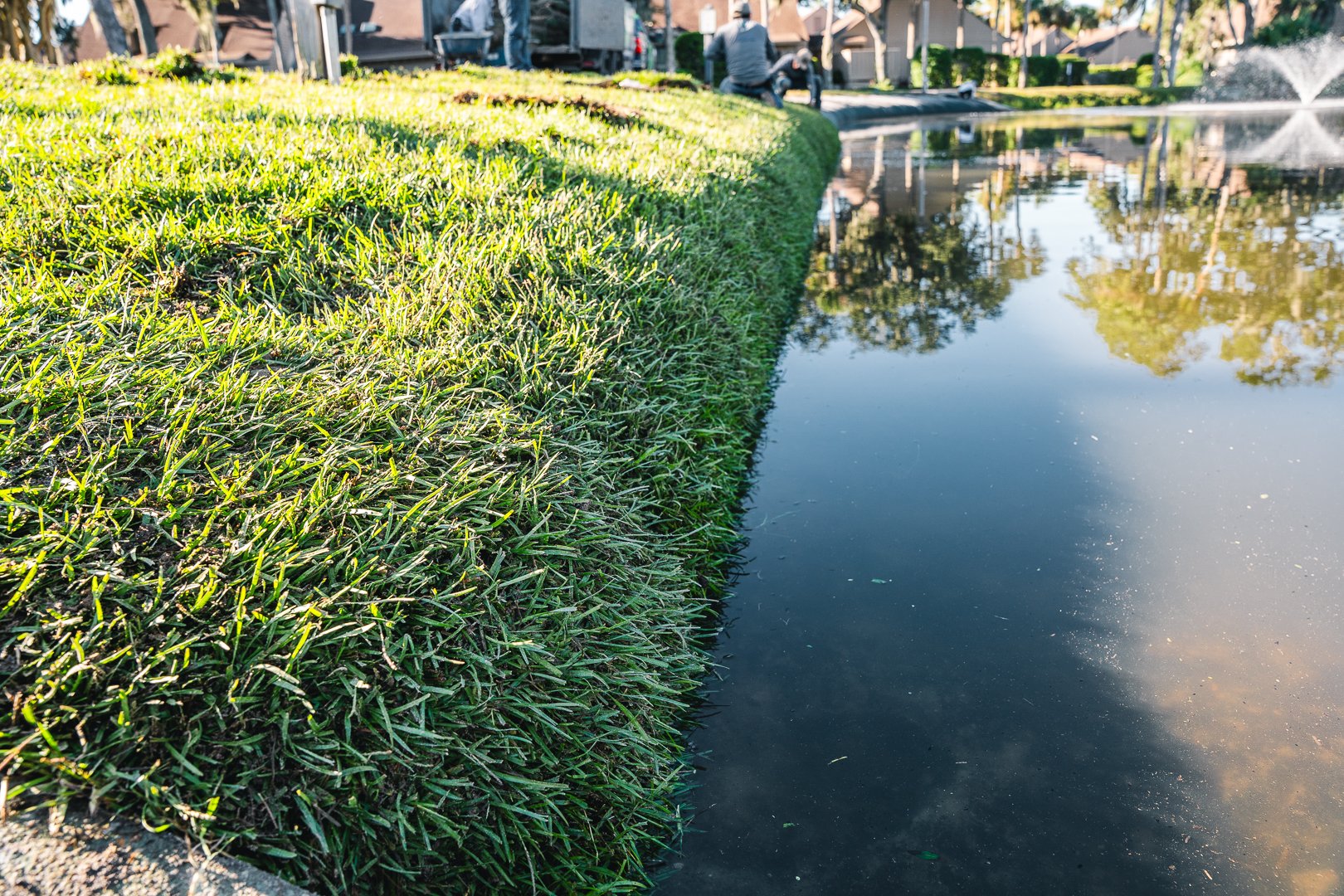
When stormwater ponds begin to underperform, dredging is often treated as the default solution. In some cases, full dredging is appropriate and unavoidable. However, it is not always necessary, and in many situations it is not the most effective first step. Stormwater ponds are complex systems, and failure rarely occurs uniformly across the entire basin. More often, performance declines due to localized issues that can be corrected through targeted, strategic restoration.
At Ecological Improvements, stormwater pond restoration is approached with a system-based mindset. Rather than assuming the entire pond has failed, we evaluate where function has been lost, why it has been lost, and which interventions will restore performance with the least disruption and cost. This approach frequently allows property owners, municipalities, and managers to avoid or delay full dredging while still achieving meaningful improvements in function, compliance, and stability.
This page serves as a definitive resource on stormwater pond restoration without full dredging. It explains how ponds fail, how to diagnose true problem areas, and how focused interventions can extend pond lifespan, reduce risk, and preserve existing infrastructure.
Why Stormwater Ponds Fail Gradually, Not All at Once
Stormwater ponds are designed to manage runoff, settle sediment, and control discharge over long time horizons. Failure is rarely sudden. Instead, it develops incrementally as sediment accumulates, banks erode, vegetation shifts, and structures degrade. These changes compound over time, eventually reaching a threshold where performance visibly declines.
Importantly, these processes do not occur evenly throughout the pond. Inlets receive the highest sediment loads. Forebays fill first. Shorelines experience repeated hydraulic stress. Outfalls concentrate discharge energy. Each component ages and degrades at a different rate.
When dredging is prescribed without understanding these dynamics, it often addresses symptoms rather than root causes. Sediment is removed, but upstream erosion continues. Banks are reshaped, but vegetation is not reestablished. Pipes are left unrepaired, allowing failures to recur.
Targeted restoration begins with understanding how and where the system is actually failing. This diagnostic step is critical to designing interventions that restore function rather than resetting the clock temporarily.
Diagnostic Assessment: Identifying the True Points of Failure
Effective stormwater pond restoration starts with a structured assessment. The central question is simple: where is the pond losing performance? The answer determines whether dredging is necessary or whether targeted repairs will suffice.
Assessments typically focus on four primary zones: inlets, forebays, banks and embankments, and outfalls or control structures. Each zone provides clues about how the pond is functioning as a system.
In many ponds, sediment accumulation is concentrated near inlets and within forebays, while the main basin retains adequate depth and storage. In other cases, the basin performs hydraulically, but eroding banks contribute sediment and threaten structural stability. Sometimes, failing pipes or outfalls drive instability despite relatively healthy pond geometry.
By documenting conditions in each zone and understanding their interactions, restoration strategies can be tailored precisely. This approach avoids unnecessary disturbance and preserves functioning components of the system.
Forebay Restoration as a First-Line Strategy
Forebays are designed to capture sediment before it spreads throughout the pond. Because they are sacrificial by design, they often reach capacity long before the rest of the basin is compromised. This makes forebay restoration one of the most effective and economical alternatives to full dredging.
Targeted forebay restoration involves excavating accumulated sediment, restoring original depth and geometry, and improving transitions into the main basin. Proper regrading ensures that inflow energy is dissipated and that sediment settles where intended.
Equally important is stabilization following excavation. Bare soils are highly vulnerable to erosion, particularly during storm events. Restoration includes installing appropriate stabilization measures and reestablishing vegetation suited to fluctuating water levels.
When forebays are restored proactively, they significantly reduce sediment loading to the main basin. This alone can extend the functional life of a pond by years or even decades, delaying the need for full dredging.
Bank and Embankment Stabilization Without Dredging
Eroding banks are one of the most visible signs of pond distress. Slumping slopes, undercut shorelines, and exposed liners are often assumed to require basin-wide intervention. In reality, these issues are typically localized and can be addressed through targeted stabilization.
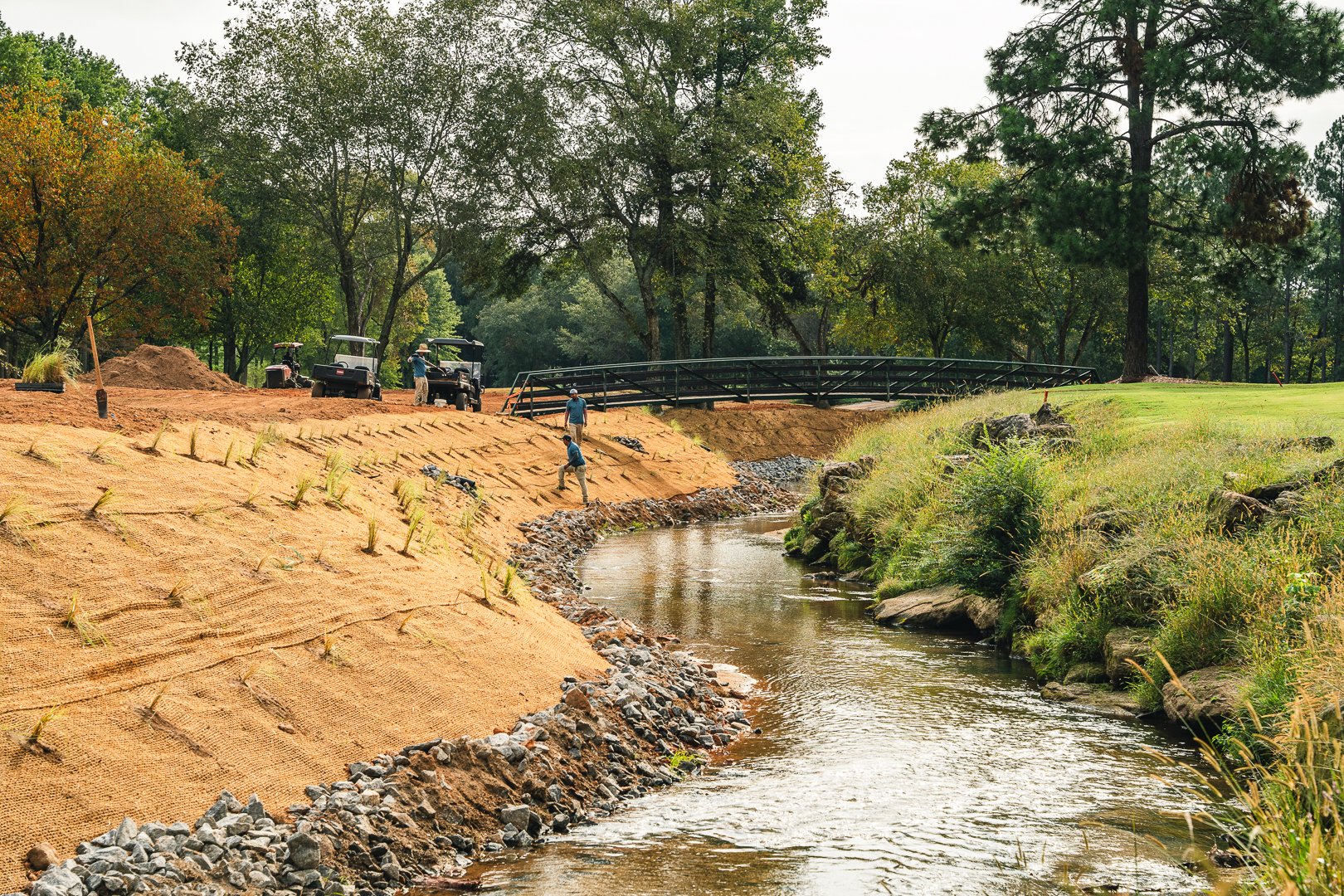
Effective bank restoration begins with correcting slope geometry where necessary. Over-steepened or irregular slopes concentrate stress and fail repeatedly. Regrading creates stable profiles that support both structural measures and vegetation.
Structural support may be required in high-energy areas. Properly installed riprap, underlain by nonwoven geotextile, protects against scour while allowing water to pass without undermining the slope. These installations must be carefully designed and constructed to avoid creating new failure points.
Vegetation is a critical component of bank stabilization. Native plants with deep, fibrous root systems bind soils and absorb wave energy. When combined with structural measures, vegetation transforms rigid stabilization into a resilient, living system.
Addressing bank erosion directly often reduces sediment inputs enough to restore pond performance without touching the basin floor.
Pipe, Outfall, and Structural Repairs as Restoration Drivers
In some cases, stormwater pond failure is driven not by sediment accumulation but by failing infrastructure. Pipes, headwalls, and outfalls concentrate flow and are subject to continuous hydraulic stress. When they fail, symptoms propagate throughout the pond.
Sinkholes along pipe alignments or adjacent to headwalls often indicate joint separation, bedding failure, or subsurface erosion. These conditions destabilize surrounding soils and alter water levels within the pond.
Targeted repairs involve investigating the cause of failure, repairing or replacing compromised pipe sections, and restoring proper bedding and backfill. Surface restoration follows, including stabilization and vegetation establishment.
By restoring structural integrity at these critical points, pond function can often be stabilized without dredging. Water levels normalize, erosion slows, and sediment transport decreases.
Ignoring structural failures while pursuing dredging is a common mistake that leads to recurring problems and wasted investment.
Vegetation Management as a Restoration Tool
Vegetation plays a central role in stormwater pond performance. Over time, unmanaged woody growth, invasive species, and poorly adapted plants can undermine both function and safety.
Woody vegetation on embankments creates preferential flow paths through root systems. When trees fall or are removed, voids remain, increasing failure risk. Targeted removal of hazardous trees, combined with appropriate stabilization and replanting, reduces long-term risk.
Invasive species often dominate disturbed areas and provide limited stabilization. Replacing unmanaged vegetation with purposeful native plantings improves soil reinforcement, wave attenuation, and ecological function.
Vegetation management also improves access for inspections and maintenance. Clear sightlines to control structures and embankments are essential for ongoing system management.
When integrated into restoration planning, vegetation management transforms a struggling pond into a stable, manageable system without large-scale excavation.
Sediment Redistribution Versus Removal
Not all sediment requires removal from a pond. In some cases, sediment has accumulated unevenly due to altered flow paths or localized erosion. Strategic redistribution can restore hydraulic function without exporting material off-site.
This approach may involve reshaping shallow areas, restoring flow paths, or relocating sediment within the basin to areas designed for storage. When performed carefully, redistribution preserves treatment capacity and minimizes disturbance.
Sediment characterization is critical. Contaminated sediments or excessive volumes may still require removal. However, where conditions allow, redistribution is a valuable tool that competitors often overlook.
Cost, Disruption, and Ecological Considerations
Full dredging is expensive, disruptive, and environmentally impactful. It often requires dewatering, heavy equipment access, sediment disposal, and extended construction timelines. These activities disrupt residents, site operations, and aquatic ecosystems.
Targeted restoration minimizes these impacts. By focusing on specific problem areas, construction footprints are smaller, timelines are shorter, and existing ecological functions are preserved.
From a financial perspective, targeted interventions often cost a fraction of full dredging. For many clients, this difference translates into tens or hundreds of thousands of dollars saved, while still achieving meaningful performance improvements.
Regulatory and Compliance Implications
Stormwater ponds are often subject to regulatory oversight. Performance issues can trigger inspections, enforcement actions, or required corrective measures. Importantly, regulators are typically concerned with function and compliance, not with whether dredging has occurred.
Documented restoration efforts that restore treatment capacity, stabilize structures, and reduce sediment export demonstrate due diligence. In many cases, regulators support targeted approaches that address root causes and reduce long-term risk.
Clear documentation of assessments, repairs, and maintenance plans is essential to supporting compliance and avoiding future disputes.
Extending Pond Lifespan Through Strategic Restoration
Stormwater ponds are long-term assets. Their lifespan is influenced not only by initial design but by how they are maintained and restored over time. Targeted restoration extends functional life by preserving what works and fixing what does not.
By intervening early and precisely, pond owners can delay major capital projects, reduce risk exposure, and maintain performance through changing regulatory and climatic conditions.
Ecological Improvements’ Restoration Philosophy
Ecological Improvements approaches stormwater pond restoration with a clear objective: fix the true problems, preserve existing function, and avoid unnecessary disruption. Our team evaluates ponds as integrated systems and designs interventions that address root causes rather than symptoms.
This philosophy allows us to help clients avoid or delay full dredging whenever feasible, while still restoring performance, stability, and compliance.
Contact Us!
If your stormwater pond is showing signs of failure but full dredging feels premature or cost-prohibitive, a targeted restoration assessment can clarify your options. Ecological Improvements provides system-based stormwater pond restoration services that focus on strategic interventions, reduced disruption, and long-term performance. Contact our team to evaluate your pond and determine whether restoration without full dredging is a viable path forward.