Understanding the Critical Role of Stormwater Ponds and BMPs
Every time it rains, stormwater begins a journey. Water flows across rooftops, parking lots, roads, sidewalks, golf courses, and commercial properties, collecting sediment, fertilizers, oils, trash, and other pollutants before entering nearby drainage systems. While many people assume stormwater disappears into a storm drain, it actually moves through an engineered network of infrastructure designed to protect communities, improve water quality, and reduce flooding.
For many communities across the East Coast, including South Carolina, Florida, and neighboring states, that journey leads to a stormwater pond, drainage ditch, bioswale, or another Best Management Practice (BMP). These systems are not simply places where water collects. They are engineered assets that slow runoff, capture sediment, reduce erosion, and improve water quality before stormwater reaches rivers, wetlands, marshes, estuaries, and coastal waters.
Stormwater ponds and BMPs also function as living ecosystems. When properly maintained, they provide habitat for wildlife, support native vegetation, improve community aesthetics, and help preserve downstream environments. When neglected, however, they can quickly lose their effectiveness, resulting in shoreline erosion, sediment accumulation, clogged drainage structures, algae blooms, reduced storage capacity, and increased flood risk.

At Ecological Improvements, we believe stormwater management is about more than regulatory compliance. Every shoreline stabilization project, pond restoration, inspection, and erosion control installation contributes to a healthier stormwater system that protects communities for years to come. Our goal is to provide proactive solutions that extend infrastructure life, improve system performance, and reduce long-term maintenance costs.
Understanding how stormwater ponds function is the first step toward protecting the investment communities have already made in their stormwater infrastructure.
What Are Stormwater Ponds and Best Management Practices (BMPs)?
Stormwater ponds are engineered facilities designed to temporarily capture and manage stormwater runoff. Rather than allowing rainfall to rapidly flow into nearby waterways, ponds hold water long enough for sediment to settle and pollutants to begin separating from the water before it is gradually released downstream.
Although stormwater ponds are among the most visible components of a drainage system, they are only one type of Best Management Practice (BMP).
A BMP is any engineered or natural feature designed to reduce stormwater runoff impacts while protecting water quality and minimizing erosion. Multiple BMPs often work together as one integrated system to safely move, store, and treat stormwater throughout a property.
Examples of common stormwater BMPs include:
Stormwater detention ponds
Stormwater retention ponds
Dry detention basins
Wet ponds
Bioswales
Vegetated swales
Forebays
Riprap outfalls
Stormwater wetlands
Infiltration basins
Underground stormwater storage systems
Energy dissipators
Each BMP performs a different function. Some temporarily store runoff during storms. Others filter pollutants, encourage infiltration, stabilize drainage channels, or reduce erosion before stormwater reaches natural waterways.
Stormwater ponds also serve as sediment traps. As runoff slows inside the pond, suspended soil particles settle to the bottom instead of continuing downstream. This protects streams, wetlands, and coastal environments while preserving water quality.
However, sediment accumulation is an expected part of the pond's lifecycle. Over time, storage capacity decreases as sediment builds up. Without periodic inspections and sediment removal, ponds gradually lose their ability to manage runoff effectively.
Stormwater ponds also improve water quality through natural biological processes. Aquatic vegetation absorbs nutrients, suspended solids settle naturally, and microorganisms help break down organic material. Together, these processes reduce the pollutant load entering downstream ecosystems.
Ecological Improvements approaches every BMP as part of a larger stormwater system. Rather than focusing only on visible issues, we evaluate how water moves across the property, through conveyance systems, into treatment areas, and safely out of the site. This system-based approach helps identify underlying problems before they become costly repairs.
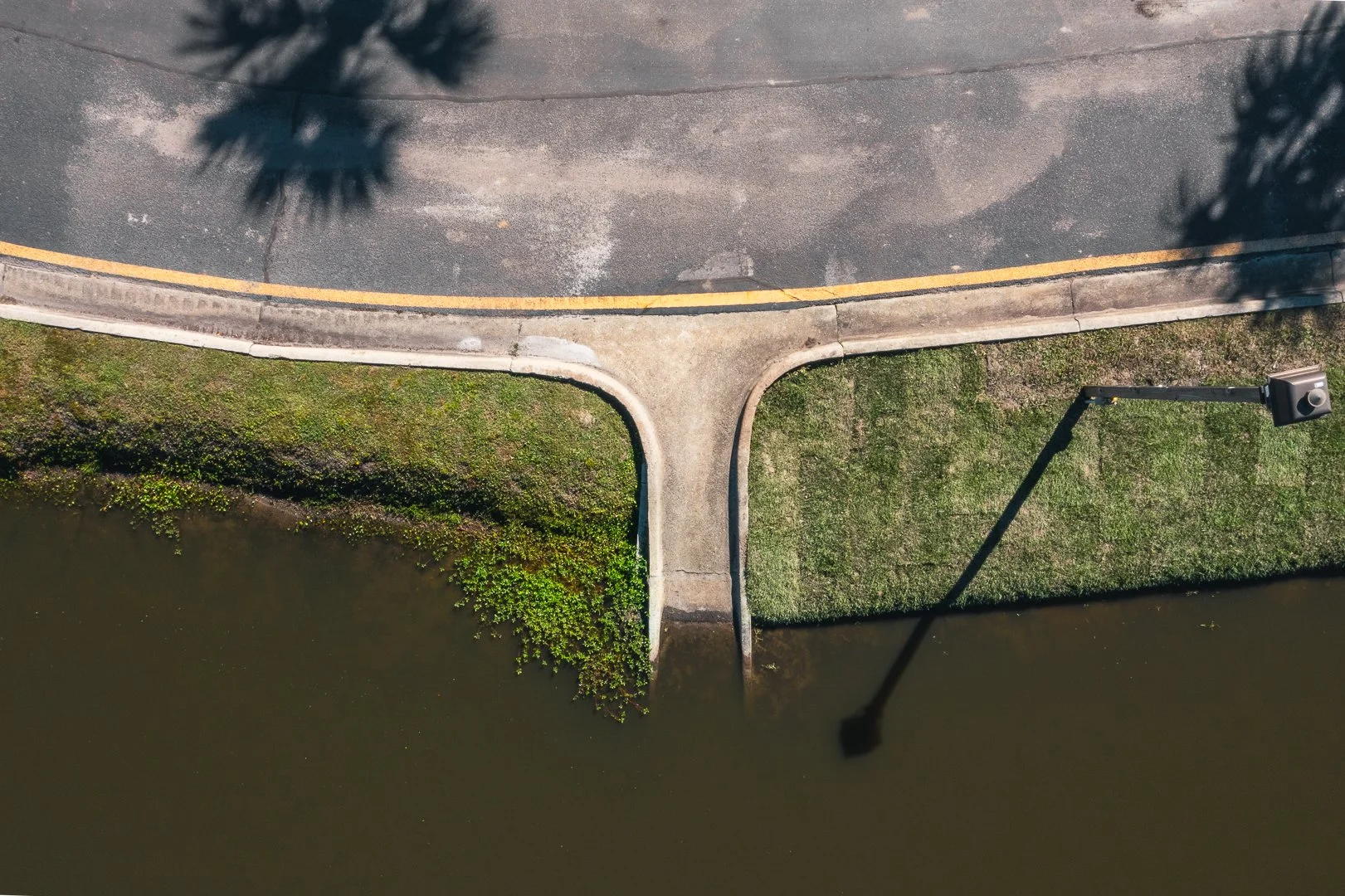
Why Stormwater Pond Maintenance Matters
Stormwater ponds are designed to function continuously, but like any infrastructure asset, they require regular maintenance to perform as intended.
Unlike roads or buildings, many stormwater ponds remain unnoticed until problems become severe. By that point, erosion may have destabilized shorelines, sediment may have reduced storage capacity, invasive vegetation may be limiting flow, or drainage structures may already be partially blocked.
Routine maintenance addresses these issues before they compromise the entire system.
One of the most important maintenance activities is shoreline stabilization. Shorelines constantly experience changing water levels, wave action, runoff, and weather conditions. Over time, these forces can weaken pond banks, causing erosion that introduces additional sediment into the pond while threatening nearby infrastructure.
Stabilization methods vary depending on site conditions but commonly include erosion control blankets, native vegetation establishment, articulated concrete block systems, riprap, geotextiles, and engineered bioengineering techniques.
Vegetation management is equally important. Healthy native vegetation helps stabilize soils, improve water filtration, and reduce erosion. However, unmanaged invasive species can obstruct water movement, reduce treatment efficiency, and require more intensive restoration efforts if left unchecked.
Sediment management is another essential component of long-term pond performance. Every storm deposits additional material into the basin. Over years, this accumulation reduces pond depth, decreases storage volume, and limits the pond's ability to slow runoff during major rainfall events.
Periodic inspections allow maintenance teams to monitor sediment levels and recommend dredging before performance significantly declines.
Routine inspections also identify structural concerns such as damaged outfalls, clogged pipes, deteriorating concrete structures, blocked spillways, or failing embankments. Addressing these issues early typically reduces repair costs while extending the lifespan of the overall stormwater system.
For property managers, municipalities, HOAs, developers, and commercial property owners, proactive maintenance often costs significantly less than emergency repairs or complete pond restoration.
How Healthy Stormwater Systems Benefit Communities
Stormwater ponds provide benefits that extend well beyond drainage.
Their primary function is protecting downstream water quality, but well-maintained ponds also improve flood resilience, support biodiversity, preserve property values, and protect public infrastructure.
During heavy rainfall, stormwater ponds temporarily store runoff and release it gradually through engineered outlet structures. This reduces peak flow rates entering downstream drainage systems, lowering the risk of localized flooding and streambank erosion.
Water quality also improves as pollutants settle, nutrients are absorbed by vegetation, and natural biological processes remove contaminants before discharge.
Healthy ponds support wildlife by providing habitat for birds, turtles, amphibians, beneficial insects, fish, and native aquatic vegetation. Proper vegetation management encourages biodiversity while maintaining the engineered function of the pond.
Communities also benefit aesthetically. Clean, stable, well-maintained ponds enhance neighborhood appearance and demonstrate responsible infrastructure management. Conversely, neglected ponds with eroded banks, excessive algae, accumulated trash, or invasive vegetation often become maintenance liabilities that diminish surrounding property values.
These benefits are interconnected. Stable shorelines reduce sediment. Reduced sediment improves storage capacity. Improved storage reduces flood risk. Better water quality supports healthier ecosystems. Each component contributes to stronger overall stormwater performance.
This systems perspective guides every project completed by Ecological Improvements.
A Proactive Approach to Stormwater Management
Stormwater infrastructure is one of the most valuable yet overlooked assets within a community. Whether serving a residential HOA, commercial development, municipal roadway, golf course, or industrial property, every BMP contributes to protecting downstream environments and reducing flood risk.
The most successful stormwater management strategies focus on prevention rather than reaction.
Routine inspections identify developing issues before they require extensive repairs. Shoreline stabilization prevents erosion before banks begin failing. Vegetation management preserves treatment performance while reducing invasive growth. Sediment removal restores storage capacity before flooding risks increase.
Together, these services extend infrastructure life while reducing long-term maintenance costs.
At Ecological Improvements, our approach combines technical expertise with practical field experience. We understand that every property presents unique hydrologic conditions, regulatory requirements, and maintenance challenges. Rather than applying one-size-fits-all solutions, we evaluate the entire stormwater system to develop strategies that improve long-term performance.
Whether restoring a neglected stormwater pond, installing erosion control measures, repairing damaged shorelines, or performing routine BMP inspections, our focus remains the same: protecting water quality, preserving infrastructure, and helping communities maintain resilient stormwater systems for years to come.
Protect Your Stormwater Infrastructure with Ecological Improvements
Stormwater ponds and BMPs are long-term investments that require proactive care to continue functioning effectively. Regular inspections, shoreline stabilization, erosion control, vegetation management, and sediment removal help preserve water quality, reduce flood risks, and extend the life of your infrastructure.
If your community, commercial property, golf course, or municipality needs assistance maintaining stormwater systems, Ecological Improvements provides comprehensive solutions tailored to your site's unique conditions. Contact our team to schedule an assessment and develop a maintenance strategy that protects your investment while supporting long-term environmental performance.