What Are My Stormwater Compliance Responsibilities?
Stormwater compliance is not a one-time task. It is an ongoing operational responsibility tied to how your property manages runoff, protects downstream water quality, and maintains regulatory alignment. Whether you oversee an HOA, golf course, commercial property, or development site, your responsibilities are defined by a combination of federal frameworks, state regulations, and local ordinances.
At a high level, stormwater compliance requires consistent inspection, documented maintenance, and timely corrective action. However, the depth of responsibility goes far beyond these basics. This guide breaks down what property owners are actually accountable for, where compliance failures typically occur, and how to structure a system that prevents violations before they happen.

Understanding Stormwater Compliance at a System Level
Stormwater compliance is often misunderstood as a checklist. In reality, it is a system that connects physical infrastructure, regulatory documentation, and ongoing maintenance into one continuous loop.
At the federal level, stormwater regulations are governed by the Environmental Protection Agency under the Clean Water Act. This framework is implemented through the National Pollutant Discharge Elimination System (NPDES), which authorizes stormwater discharges under specific permits.
From there, authority is delegated to state agencies and further enforced at the municipal or county level. This layered structure means your compliance obligations are not static. They vary based on:
Property type (HOA, commercial, industrial, municipal)
Presence of active permits (construction or post-construction)
Local stormwater ordinances and inspection programs
Age and design of your stormwater system
Stormwater compliance is ultimately about ensuring that your system performs as designed. This includes managing runoff volume, reducing sediment transport, and preventing pollutants from entering nearby water bodies.
The Core Components of Compliance
Every compliant stormwater system is built around three interconnected components:
1. Inspection
You are responsible for evaluating the condition and performance of your stormwater infrastructure on a recurring basis. This includes ponds, outfalls, conveyance systems, and erosion control measures.
2. Maintenance
Inspection alone does not satisfy compliance. You must actively maintain the system. This includes sediment removal, vegetation management, erosion repair, and structural corrections.
3. Documentation
Regulatory agencies do not assume compliance. You must prove it. This is done through logs, reports, inspection records, and maintenance documentation.
If any one of these components is missing, the entire compliance system breaks down. For example, a well-maintained pond without documentation can still result in a violation during an audit.
Why System-Based Thinking Matters
Most compliance failures do not occur because a property owner ignored regulations. They occur because there was no structured system connecting inspections, maintenance, and reporting.
Common breakdowns include:
Inspections completed but not documented
Maintenance performed reactively instead of proactively
No defined schedule for recurring compliance activities
Lack of clarity on who is responsible for oversight
A system-based approach eliminates these gaps. It ensures that every part of your stormwater operation feeds into a single, trackable workflow.
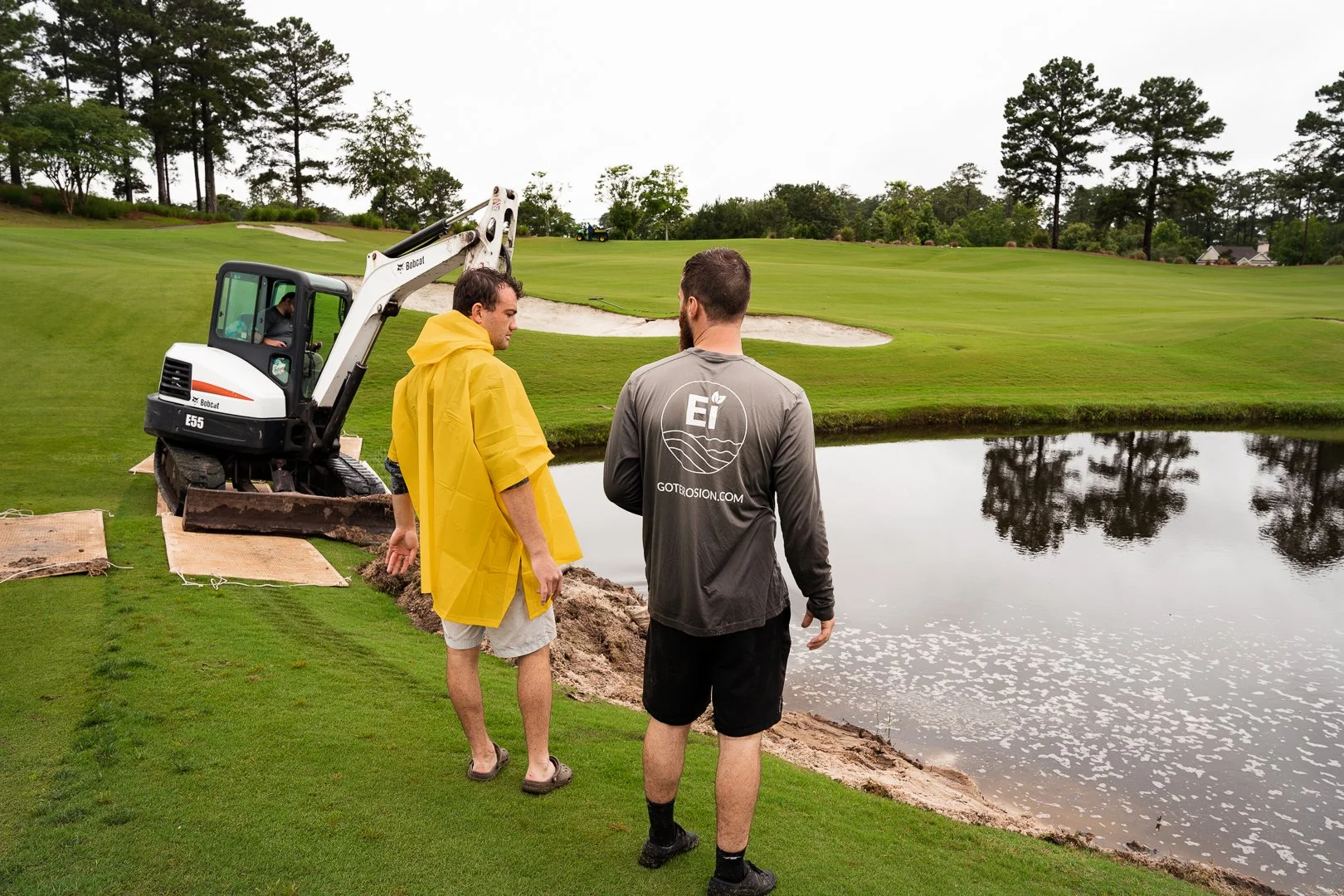
Required Stormwater Inspections and Frequency
Inspection is the foundation of stormwater compliance. Without consistent evaluation, it is impossible to determine whether your system is functioning as intended.
The frequency and scope of inspections depend on your property type and regulatory requirements. However, most properties fall into a predictable inspection framework.
Standard Inspection Requirements
For most HOAs, commercial properties, and post-construction systems, inspections typically include:
Annual inspections of all stormwater management structures
Post-storm inspections following significant rainfall events
Routine visual checks to identify emerging issues between formal inspections
If your property operates under a construction permit, inspection frequency increases significantly. In these cases, inspections may be required:
Weekly
After every measurable rain event
At key phases of site development
What Must Be Inspected
Stormwater compliance inspections are not surface-level walkthroughs. They require a detailed evaluation of each component within the system.
Key inspection areas include:
Stormwater Ponds and Basins
Sediment accumulation levels
Bank stability and erosion
Vegetation condition and overgrowth
Inlet and outlet functionality
Conveyance Systems
Swales, pipes, and channels
Blockages or debris buildup
Signs of scouring or washout
Outfalls and Discharge Points
Evidence of erosion or sediment discharge
Structural integrity
Downstream impact
Erosion and Sediment Controls
Silt fences and barriers
Construction entrances
Stabilization measures
Identifying Deficiencies Early
The purpose of inspections is not just to observe. It is to identify deficiencies before they escalate into compliance issues.
Common deficiencies include:
Sediment buildup reducing pond capacity
Erosion compromising structural integrity
Blocked inlets preventing proper drainage
Vegetation overgrowth interfering with system performance
Early detection is critical. The longer an issue remains unaddressed, the more likely it is to result in:
Regulatory violations
Increased repair costs
System failure during storm events
Inspection Documentation Requirements
Every inspection must be documented in a way that satisfies regulatory review. This typically includes:
Date and time of inspection
Weather conditions
Observations and findings
Identified deficiencies
Recommended or completed corrective actions
Inspection records should be stored in a centralized system that allows for easy retrieval during audits or permit renewals.
Maintenance Logs, Documentation, and Recordkeeping
Documentation is one of the most overlooked aspects of stormwater compliance. Many properties perform maintenance but fail to document it properly, which creates exposure during regulatory reviews.
Stormwater compliance is not based on what was done. It is based on what can be proven.
What Must Be Documented
At a minimum, your documentation system should include:
Inspection reports
Maintenance logs
Sediment removal records
Vegetation management activities
Repair and construction work
Photographic evidence of conditions and improvements
Each record should clearly link back to a specific inspection or identified issue.
Maintenance Logs as a Compliance Tool
Maintenance logs are not just records. They are a core compliance tool that demonstrates proactive system management.
A well-structured maintenance log should include:
Description of work performed
Location within the system
Date of completion
Contractor or personnel involved
Before and after conditions
These logs create a timeline of system performance and response. This is particularly important during:
Regulatory audits
Permit renewals
Enforcement investigations
Retention Requirements
Most jurisdictions require stormwater records to be retained for multiple years. While exact timelines vary, it is common for agencies to request:
3 to 5 years of inspection and maintenance records
Full documentation tied to active permits
Failing to produce these records can result in:
Fines or penalties
Increased scrutiny from regulators
Delays in permit approvals
Digital vs. Manual Recordkeeping
Many properties still rely on manual recordkeeping, which introduces risk. Paper logs can be lost, incomplete, or difficult to organize.
A digital system offers several advantages:
Centralized storage of all compliance records
Easier retrieval during audits
Improved consistency across inspections and reports
Integration with maintenance scheduling
For properties managing multiple stormwater assets, digital documentation is no longer optional. It is a necessary component of a scalable compliance system.
Corrective Actions and Responding to Deficiencies
Inspection and documentation are only effective if they lead to action. When deficiencies are identified, property owners are responsible for addressing them within a reasonable timeframe.
Failure to take corrective action is one of the most common causes of stormwater violations.
What Triggers Corrective Action
Corrective actions are required when inspections identify:
Structural damage to stormwater infrastructure
Erosion or sediment transport issues
Blockages affecting system performance
Non-functioning BMPs (Best Management Practices)
In some cases, corrective actions may also be triggered by:
Regulatory inspection findings
Resident or tenant complaints
Observed flooding or drainage issues
Timelines for Resolution
While timelines vary by jurisdiction, most regulations expect corrective actions to be completed:
Immediately for critical failures
Within a defined timeframe for non-critical issues
Before the next scheduled inspection cycle
Delays in addressing deficiencies increase both regulatory risk and repair costs.
Types of Corrective Actions
Corrective actions can range from routine maintenance to more complex system repairs.
Examples include:
Sediment removal from ponds or forebays
Regrading eroded slopes
Repairing or replacing outlet structures
Clearing blocked conveyance systems
Re-establishing vegetation for stabilization
Each corrective action should be documented and linked to the original inspection finding.
Proactive vs. Reactive Maintenance
Reactive maintenance occurs after a problem is identified. Proactive maintenance prevents the problem from occurring in the first place.
A proactive approach includes:
Scheduled sediment removal before capacity is compromised
Routine vegetation management to maintain flow paths
Regular system assessments to identify early-stage issues
Proactive maintenance reduces:
Long-term costs
Emergency repairs
Regulatory exposure
Stormwater Management Plans (SWPPPs) and Permitting
For properties operating under permits, compliance responsibilities extend beyond inspections and maintenance. You are also required to maintain and follow a Stormwater Pollution Prevention Plan (SWPPP).
What Is a SWPPP?
A SWPPP is a site-specific document that outlines how stormwater will be managed to prevent pollution. It includes:
Site maps and drainage patterns
Identified pollutant sources
Best Management Practices (BMPs)
Inspection and maintenance procedures
Spill response protocols
SWPPPs are required for:
Construction sites
Certain industrial operations
Some post-construction developments
Your Responsibilities Under a SWPPP
If your property is covered by a SWPPP, you are responsible for:
Implementing all outlined BMPs
Conducting required inspections
Maintaining documentation
Updating the plan as site conditions change
Failure to follow a SWPPP can result in:
Permit violations
Stop-work orders (for construction sites)
Fines and enforcement actions
Permit Compliance Beyond SWPPPs
In addition to SWPPPs, property owners may be subject to:
Municipal Separate Storm Sewer System (MS4) requirements
Local stormwater ordinances
Post-construction maintenance agreements
Each of these introduces additional layers of compliance that must be managed alongside your physical stormwater system.
Common Compliance Failures and How to Avoid Them
Stormwater compliance failures are rarely caused by a single issue. They are usually the result of small gaps that compound over time.
Understanding these common failures allows property owners to build systems that prevent them.
Lack of Consistent Inspections
Skipping inspections or performing them inconsistently leads to missed issues. Without regular evaluation, small problems escalate into larger failures.
Solution: Establish a fixed inspection schedule and assign clear responsibility.
Poor Documentation
Maintenance performed without documentation is treated as if it never happened. This creates exposure during audits.
Solution: Implement a standardized documentation system for all inspections and maintenance activities.
Reactive Maintenance
Waiting until a system fails increases both cost and risk.
Solution: Shift to a proactive maintenance model with scheduled interventions.
Misunderstanding Regulatory Requirements
Regulations vary by jurisdiction. Assuming compliance based on general knowledge can lead to violations.
Solution: Work with professionals who understand local, state, and federal requirements.
Fragmented Vendor Management
Using multiple contractors without coordination can result in inconsistent maintenance and reporting.
Solution: Consolidate stormwater services under a unified management system.
How Ecological Improvements Supports Stormwater Compliance
Stormwater compliance requires more than individual services. It requires a coordinated system that connects inspections, maintenance, documentation, and regulatory support.
Ecological Improvements provides a system-based approach designed to eliminate gaps in compliance.
Compliance Inspections
We conduct inspections tailored to your jurisdiction and property type. Each inspection is structured to identify both existing deficiencies and potential future risks.
Reporting and Documentation
Our documentation process ensures that every inspection and maintenance activity is recorded in a format that supports audits, permit renewals, and regulatory reviews.
Maintenance Planning and Execution
We develop maintenance schedules based on system performance, not just calendar intervals. This allows for proactive intervention before issues escalate.
Permit and Regulatory Support
For properties with active permits, we provide guidance and support to ensure alignment with all regulatory requirements, including SWPPPs and local ordinances.
A Consolidated Approach
Instead of managing multiple vendors, our approach consolidates stormwater services into a single system. This reduces complexity and improves accountability.
Building a Long-Term Compliance Strategy
Stormwater compliance is not a short-term obligation. It is an ongoing operational requirement that must be integrated into property management.
A long-term strategy includes:
Defined inspection schedules
Structured maintenance plans
Centralized documentation systems
Clear assignment of responsibility
Ongoing evaluation and improvement
When these elements are in place, compliance becomes predictable rather than reactive.
Contact Us!
If you are unsure about your stormwater compliance responsibilities or want to ensure your system is fully aligned with regulatory requirements, Ecological Improvements can help.
We provide inspections, documentation, maintenance planning, and regulatory support designed to keep your stormwater system functional and compliant.
Contact Ecological Improvements today at 843-259-2287 to schedule a consultation and build a compliance system that works.