Stormwater Pond Inspection: Warning Signs Your Pond Needs Attention
Stormwater ponds rarely fail without warning. Most develop visible, structural, or operational problems gradually, giving property owners and managers opportunities to intervene before minor deficiencies become expensive repairs. The difficulty is recognizing which changes are routine, which indicate declining performance, and which require prompt professional evaluation.
Algae, eroding banks, clogged pipes, persistent wet areas, sediment accumulation, and unmanaged vegetation are more than appearance concerns. Each condition can reveal how water, sediment, nutrients, vegetation, and infrastructure are interacting across the entire stormwater system. Evaluating these clues together is the foundation of an effective stormwater pond inspection.
For HOAs, golf courses, municipalities, developers, and commercial properties, early identification supports more predictable budgeting and better long-term maintenance. It also helps protect drainage performance, water quality, surrounding property, and downstream resources. The objective is not to treat every imperfection as an emergency, but to understand what the pond is communicating and respond according to risk.
Common Warning Signs Identified During a Stormwater Pond Inspection
A pond inspection should evaluate the water, shoreline, embankment, drainage structures, vegetation, and surrounding property as connected components. A visible problem in one area may originate somewhere else. Murky water may be related to upstream erosion, for example, while a wet area behind an embankment may indicate a pipe or seepage issue rather than ordinary drainage.
Chronic Algae Blooms or Murky Water
Some algae are normal in stormwater ponds, particularly during warm weather. Repeated, extensive, or unusually persistent blooms may indicate excess nutrients, limited circulation, elevated water temperatures, or a pond that has become shallower because of sediment accumulation.
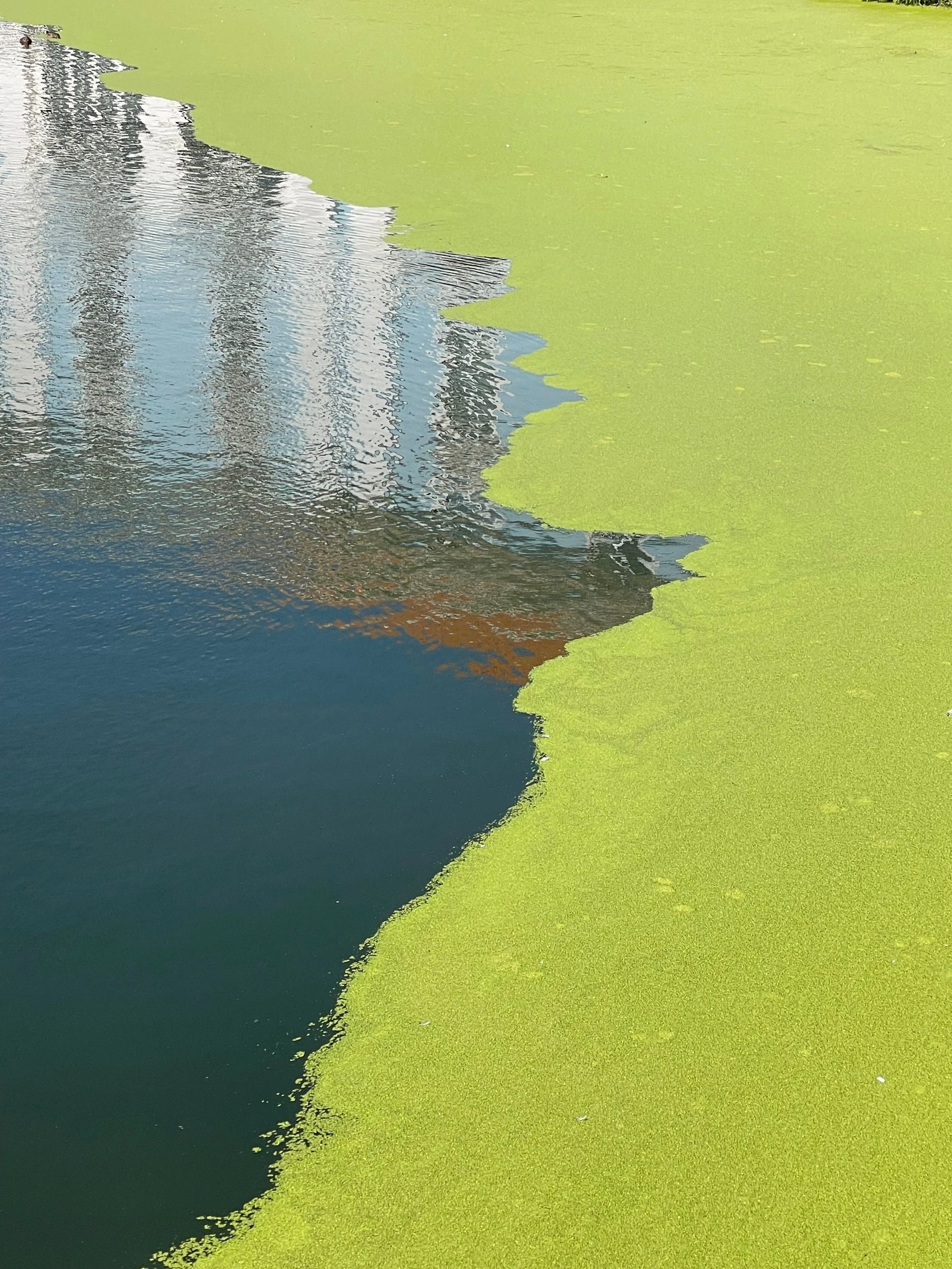
Nutrients can enter through lawn fertilizer, landscape runoff, organic debris, pet waste, eroded soil, upstream drainage areas, and internal nutrient cycling within pond sediment. As sediment accumulates, the pond loses depth and storage volume. Shallower water warms faster and can create conditions favorable to algae growth.
Murky or discolored water may result from suspended sediment, algae, organic matter, or disturbed bottom material. The source cannot always be identified visually. A pond health assessment should therefore consider recent rainfall, upstream construction, shoreline erosion, inflow conditions, water depth, vegetation, and seasonal patterns.
Treating algae without addressing the underlying nutrient or sediment source often provides temporary improvement. Effective water quality management may require sediment removal, shoreline stabilization, upstream erosion control, vegetation management, aeration, nutrient-source reduction, or a combination of measures.
Eroding, Undercut, or Slumping Banks
Bare soil, exposed roots, collapsing edges, gullies, and undercut banks indicate that the shoreline is losing material. Common causes include wave action, fluctuating water levels, concentrated runoff, steep slopes, poor vegetation coverage, mowing too close to the water, and unstable soil.
Bank erosion can reduce water quality by introducing sediment and nutrients into the pond. It can also threaten sidewalks, fences, landscaping, roads, utilities, recreational areas, and nearby structures. As a bank becomes steeper, it may be more difficult to stabilize using vegetation alone.
Slumping is different from minor surface erosion. A slumped area may indicate deeper soil movement, saturated soil, loss of support at the toe of the slope, or drainage entering the bank from above. Filling the visible depression without correcting the cause may add weight to an already unstable slope and provide only a short-term repair.
A complete erosion assessment should evaluate the bank geometry, soil, water-level patterns, vegetation, wave exposure, runoff pathways, and nearby infrastructure. Appropriate solutions may include grading, soil reinforcement, native shoreline vegetation, bioengineering, coir products, erosion control matting, rock protection, drainage correction, or a living shoreline approach.
Inlet, Outlet, and Spillway Problems
Inlets bring stormwater into the pond, while outlets control how water leaves. Sediment, trash, vegetation, or displaced material can partially block these structures and change the pond’s water level, storage capacity, and flow pattern.
A partially buried inlet may force water to spread into areas not designed to carry flow. A clogged outlet can cause prolonged high water, upstream ponding, or overtopping. Damaged headwalls, separated joints, corroded components, cracked concrete, missing riprap, and eroded discharge channels can reduce reliability.
The U.S. Environmental Protection Agency identifies inlet and outlet repair, embankment maintenance, sediment removal, and control of algae among common wet detention pond maintenance needs. EPA guidance also emphasizes that correcting smaller deficiencies can help prevent larger and more expensive repairs. Review the EPA wet detention pond guidance.
Spillways should remain clear and stable so they can safely convey water when primary outlets reach capacity. Woody growth, sediment, debris, erosion, or unauthorized modifications can interfere with that function. Because outlets and spillways influence water levels across the facility, their condition should be evaluated as part of every stormwater pond inspection.
Standing Water, Wet Spots, and Sinkholes
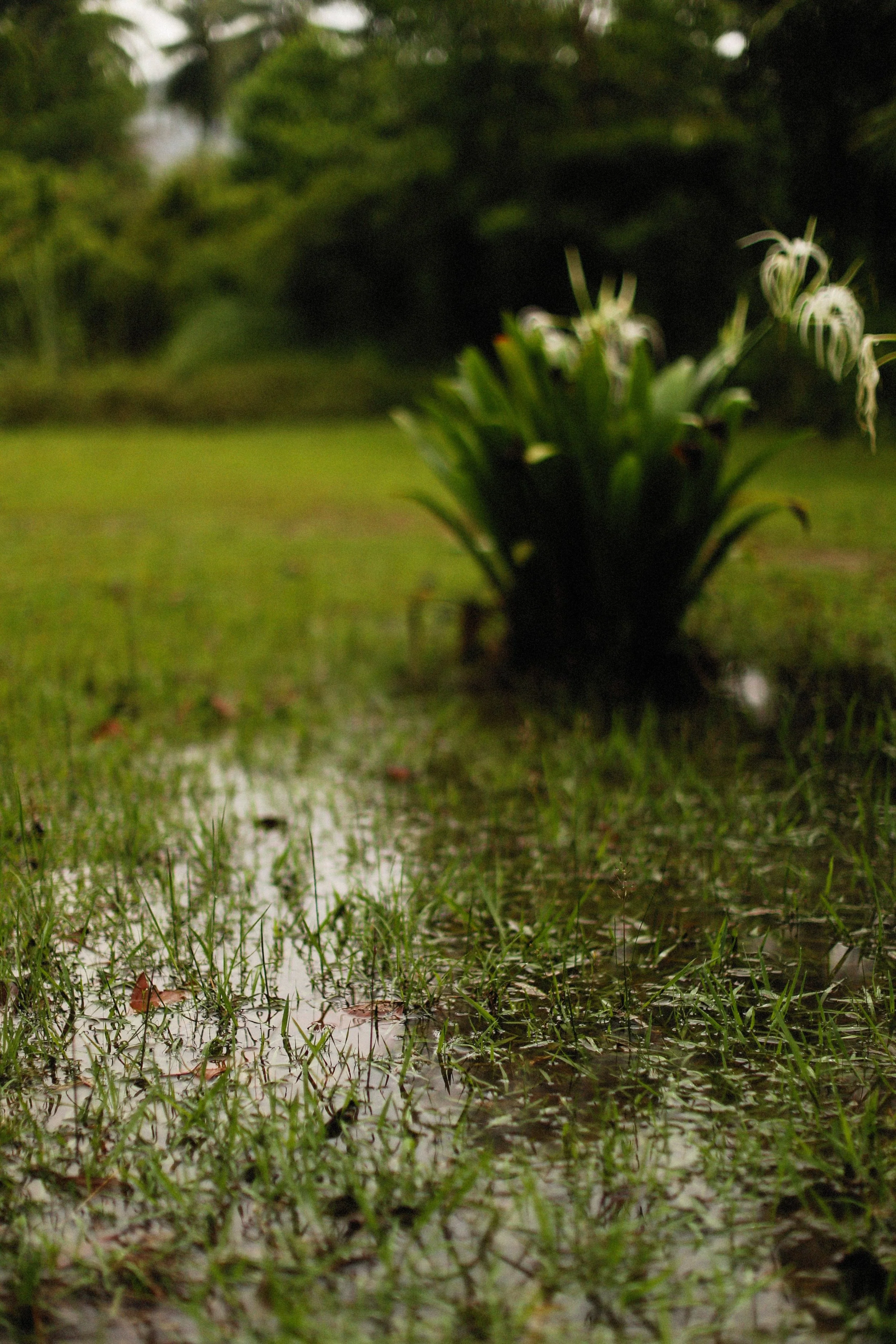
Persistent wet areas on the downstream side of an embankment deserve attention, particularly when they are new, expanding, discolored, or located near a pipe. Potential causes include groundwater, surface runoff, clogged drainage, pipe leakage, separated joints, seepage through the embankment, or erosion of soil around a structure.
Sinkholes or depressions near pipes can indicate that soil is being displaced into an opening or void. This process may continue below the surface even when the visible depression appears small. Simply adding soil to the top may conceal the condition without stopping the loss of material.
Not every soggy area signals structural failure. Soil type, rainfall, irrigation, natural groundwater, and site grading can also create persistent moisture. The location, timing, flow, color, and relationship to pond structures help distinguish normal wetness from a condition requiring further evaluation.
USDA guidance notes that uncontrolled seepage can contribute to internal erosion, void development, soil collapse, and embankment instability. Wet spots, springs, depressions, unusual vegetation, and discolored seepage are among the conditions inspectors may evaluate. Read the USDA dam safety technical guidance.
Unmanaged Woody Vegetation
Trees and shrubs growing on embankments may look established and beneficial, but woody vegetation can complicate structural maintenance. Large roots may create preferential seepage paths, obstruct inspections, interfere with outlet structures, and leave voids when trees die or are removed.
This does not mean every tree near a stormwater pond should be removed. The location, species, size, root system, embankment design, and applicable maintenance requirements must be considered. Mature trees should not be removed from a structural embankment without evaluating how root decay and removal activities could affect the soil.
Low vegetation should generally allow inspectors to see the ground surface and identify erosion, settlement, animal burrows, wet areas, and cracking. Vegetation management should preserve desirable shoreline habitat where appropriate while maintaining safe access and visibility around critical infrastructure.
What These Warning Signs Reveal About Pond Performance
A stormwater pond is designed to receive runoff, temporarily store water, settle sediment, manage discharge rates, and, depending on the design, support water quality treatment. When one component declines, the effects can extend throughout the facility and into connected drainage systems.
Understanding those relationships is important because the most visible problem is not always the primary problem. Algae may be the complaint residents notice, but sediment accumulation, eroding upstream channels, or unmanaged nutrient inputs may be the conditions sustaining it.
Sediment Accumulation Changes the Pond
Stormwater ponds are intended to capture some of the sediment transported by runoff. That means sediment accumulation is expected, but it still requires monitoring and periodic management. As sediment builds up, it reduces pond depth and may reduce available storage or treatment volume.
Sediment frequently accumulates near inlets first because water slows as it enters the pond. Deposits can form deltas that alter flow patterns, redirect water toward banks, bury pipes, and support unwanted vegetation. If sediment reaches outlet structures, it can interfere with hydraulic performance.
Visual observations provide useful clues, but they do not establish the total sediment volume. Depth measurements, bathymetric surveys, original plans, maintenance records, and sediment probing may be needed to determine how much capacity has been lost.
Sediment removal should be planned carefully. Access, dewatering, material handling, testing, disposal, erosion controls, permitting, and restoration can affect project cost and timing. Removing sediment from one visible area without assessing the larger pond may not restore the intended function.
Water Quality Problems Often Have Multiple Causes
Stormwater pond water quality is influenced by the drainage area, pond geometry, residence time, sediment, vegetation, sunlight, temperature, oxygen, and maintenance history. Algae or odors should not automatically be attributed to a single cause.
A pond receiving nutrient-rich runoff may continue experiencing blooms even after algae treatment. A shallow pond may warm quickly and support excessive plant growth. Limited circulation can contribute to stagnant conditions, but adding aeration alone will not correct sediment loading, shoreline erosion, or fertilizer runoff.
The practical approach is to separate symptoms from sources. Algae management may still be appropriate, particularly when blooms affect use, appearance, or aquatic conditions, but it should be integrated with nutrient control and physical maintenance.
Vegetated buffers can help filter runoff, slow water, stabilize soil, and reduce direct mowing impacts along the shoreline. Their effectiveness depends on adequate width, appropriate plant selection, drainage patterns, and consistent maintenance. Concentrated flow can pass through or erode a buffer if the upland drainage system is not corrected.
Erosion Can Originate Above or Below the Waterline
Shoreline loss is often attributed to water in the pond, but upland runoff may be equally important. Downspouts, streets, parking lots, paths, and compacted turf can concentrate water toward the bank. Once a channel forms, repeated rainfall can enlarge it and carry soil directly into the pond.
Erosion may also begin at the toe of the slope. Water-level fluctuations, wind-driven waves, fountains, and repeated discharge can remove lower-bank material. The unsupported upper bank then becomes steeper and eventually collapses.
This distinction affects the repair. Surface stabilization will not last if the toe continues eroding, while rock placed at the waterline will not stop concentrated runoff from cutting through the upper slope. A system-based erosion control plan addresses both the source of water and the area where soil is being lost.
Internal linking opportunities can naturally connect this discussion to resources on stormwater erosion control, pond shoreline stabilization, exposed tree roots near ponds, and living shoreline systems. Together, these topics help explain why durable bank repairs require more than installing material over a visible problem.
Structural Components Affect the Entire Drainage Network
Inlet and outlet structures regulate how water moves through the facility. When they are damaged, buried, or blocked, the consequences may appear far from the structure itself.
A restricted outlet can keep water elevated longer than intended, saturate banks, affect vegetation, and reduce available storage before the next storm. A damaged inlet can create localized scour or send flow toward an unprotected bank. A deteriorated downstream channel can undermine an otherwise functional outlet.
Pond inspection should therefore extend beyond the water’s edge. Upstream conveyances, catch basins, swales, outfalls, downstream channels, and emergency overflow routes may all influence pond performance.
This creates a strong connection between pond maintenance and outfall inspection, stormwater infrastructure maintenance, and drainage system assessments. A pond should not be evaluated as an isolated landscape feature when it functions as one component of a larger stormwater network.
How a Professional Pond Health Assessment Prioritizes Risk
A useful stormwater pond inspection does more than generate a list of deficiencies. It identifies which conditions require immediate attention, which should be included in upcoming maintenance, and which can be monitored over time.
Without prioritization, property managers may spend limited funds on visible concerns while structural or hydraulic problems continue developing. A clear assessment connects each observation to its potential consequence and recommended response.
Safety and Structural Conditions Come First
Conditions that may affect embankment stability, uncontrolled water movement, public safety, or critical infrastructure generally receive the highest priority. Examples include active sinkholes, rapidly expanding wet areas, substantial embankment settlement, severe outlet damage, uncontrolled erosion near structures, and blocked emergency spillways.
These conditions do not always mean failure is imminent. They do justify timely evaluation by qualified personnel because delays can allow water and soil movement to continue below the surface.
The assessment should document the location, approximate dimensions, observed flow, surrounding vegetation, recent weather, and relationship to pipes or structures. Photographs are useful, but elevations, measurements, and engineering review may be required for complex conditions.
If immediate repair is not possible, temporary controls may be recommended to reduce exposure or prevent further damage. Temporary measures should be clearly identified as such and should not substitute for a permanent corrective plan.
Hydraulic Function Comes Next
After immediate safety and structural concerns, the assessment should evaluate whether the pond can receive, store, and release water as intended. Inlets, outlets, trash racks, risers, control devices, spillways, channels, and downstream discharge areas should be visible and accessible.
Accumulated debris should be evaluated based on its effect on flow rather than appearance alone. A small branch near an outlet may be relatively minor, while a dense mat of vegetation and trash across a control opening can materially restrict discharge.
Water levels provide another clue. Persistent high water, unexpectedly low water, extended drawdown times, or rapid fluctuations may indicate blockages, leaks, damaged controls, sedimentation, or changes in the drainage area.
Original plans are valuable when available because they establish the intended pond geometry and structure configuration. Where plans are missing, field documentation and survey information become even more important.
Erosion and Sediment Risks Follow
Bank erosion, inlet scour, exposed soil, sediment deltas, unstable access routes, and downstream channel damage should be ranked according to their rate of change and proximity to infrastructure.
A small bare area on a gentle slope may be corrected through vegetation and maintenance. An undercut bank near a sidewalk may require grading and structural protection. Sediment accumulating near an inlet may point to an upstream source that should be corrected before dredging or excavation.
The assessment should distinguish routine maintenance from capital repair. Routine work may include debris removal, selective vegetation management, minor stabilization, and access restoration. Capital projects may include sediment removal, pipe replacement, major bank reconstruction, embankment repair, or outlet rehabilitation.
This distinction allows property owners to separate annual operating expenses from larger reserve or infrastructure investments. It also supports phased implementation when every deficiency cannot be addressed in one budget cycle.
Water Quality, Habitat, and Appearance Remain Important
Once structural, hydraulic, and active erosion concerns are understood, the assessment can address algae, invasive vegetation, odors, shoreline appearance, habitat, and access.
These conditions matter because they affect pond performance, community satisfaction, maintenance access, and downstream water quality. They simply should not displace higher-risk repairs when budgets are limited.
Aesthetic improvements can often be coordinated with functional work. Native shoreline plants may stabilize soil while improving appearance. Sediment removal can restore depth while reducing shallow areas that support excessive vegetation. Selective clearing can improve access while preserving appropriate habitat.
Pond management should avoid the opposite mistake of treating appearance as irrelevant. Residents and property users are more likely to report problems and support maintenance when they understand how appearance relates to function. Clear communication can explain why some natural vegetation is beneficial while unmanaged woody growth on a structural embankment may require attention.
Turning Inspection Findings Into a Practical Pond Maintenance Plan
The value of a stormwater pond inspection depends on what happens afterward. A useful report should translate field observations into corrective actions, maintenance priorities, documentation, and realistic budgeting steps.
The goal is to replace reactive decisions with an organized program. That does not mean every repair must occur immediately. It means each condition should have an appropriate response, responsible party, and timeframe.
Document Existing Conditions
The inspection report should identify the pond, inspection date, recent weather, observed water level, access conditions, and major system components. Photographs should be labeled by location and direction so future inspections can compare the same areas.
Each finding should describe what was observed without overstating what can be concluded visually. For example, a report may document a persistent wet area near an outlet pipe and recommend further evaluation rather than declaring that the pipe has failed without supporting evidence.
Maintenance history provides valuable context. Records of sediment removal, algae treatments, shoreline repairs, pipe work, vegetation clearing, and previous inspections can reveal recurring patterns. If the same bank is repaired repeatedly, the original erosion source may remain unresolved.
EPA stormwater maintenance guidance recommends identifying responsible parties, inspection requirements, maintenance schedules, funding sources, and routine tasks such as sediment removal and inlet or outlet cleaning. Review EPA stormwater maintenance guidance.
Develop Corrective Actions by Priority
Recommended actions should be specific enough to support decision-making. “Repair erosion” provides limited guidance. A stronger recommendation identifies the affected area, likely contributing factors, additional investigation needed, and general repair approach.
High-priority recommendations may require engineering, utility coordination, permitting, or immediate contractor involvement. Medium-priority work may be scheduled during the next maintenance cycle. Lower-priority observations may remain on a monitoring list with photographs and measurable thresholds for action.
A phased plan can help communities and property owners manage costs. Phase one may address drainage structures and safety concerns. Phase two may stabilize active erosion and correct sediment sources. Phase three may focus on water quality, vegetation, access, and appearance.
The order matters. Dredging a pond before stabilizing upstream erosion may allow it to refill with sediment. Planting a shoreline before correcting unstable slopes or concentrated runoff may result in plant loss. Removing mature trees before evaluating embankment impacts may create voids or expose vulnerable soil.
Establish Inspection and Maintenance Intervals
Inspection frequency should reflect the pond’s design, condition, regulatory obligations, and risk. A newer facility with accessible structures and limited deficiencies may follow a routine schedule. A pond with active erosion, sediment problems, or structural concerns may need more frequent monitoring.
Inspections are particularly useful after major storms, unusual water levels, construction activity in the drainage area, or reported changes. Post-storm reviews can identify debris blockages, new erosion, displaced protection, damaged vegetation, or changes in seepage.
Routine maintenance may include trash removal, inlet and outlet cleaning, selective mowing, invasive vegetation control, minor revegetation, access maintenance, and observation of known problem areas. Specialized work such as sediment removal, structural repair, or embankment evaluation should be performed by appropriately qualified professionals.
Maintenance records should include the date, work completed, contractor, materials used, disposal documentation when applicable, and photographs. Consistent records support regulatory compliance, improve future budgeting, and provide continuity when property managers or board members change.
Budget for Pond Management as Infrastructure
Stormwater ponds are often treated as landscape amenities until a major repair is needed. In reality, they are infrastructure assets that require inspection, maintenance, and periodic capital investment.
A long-term budget should account for recurring vegetation management, debris removal, inspection, minor erosion repair, sediment monitoring, and eventual rehabilitation. The timing of major work will vary, but acknowledging those needs allows reserves to develop before an urgent project arises.
Phased budgeting can be especially valuable for HOAs and commercial properties. A written assessment gives decision-makers a technical basis for explaining why work is needed, how priorities were established, and what may happen if repairs are deferred.
The purpose is not to create unnecessary concern. It is to provide enough information for responsible planning. Ponds are complex systems, but decisions become more manageable when property owners understand current conditions, risk levels, and practical next steps.
Ecological Improvements provides stormwater pond inspections and pond health assessments that evaluate water quality, sediment, erosion, vegetation, embankments, inlets, outlets, and surrounding drainage conditions. Findings are documented with photographs, prioritized recommendations, and phased corrective options when appropriate.
If your pond is showing signs of algae, murky water, eroding banks, sediment buildup, damaged structures, persistent wet areas, or unmanaged vegetation, schedule a pond health assessment with Ecological Improvements. Early evaluation can help clarify the cause, establish priorities, and support a more predictable maintenance plan.